Friday, April 27, 2012

Topic Question Essay 5: Completeness and Truth
Essay #2b

Completeness and Truth


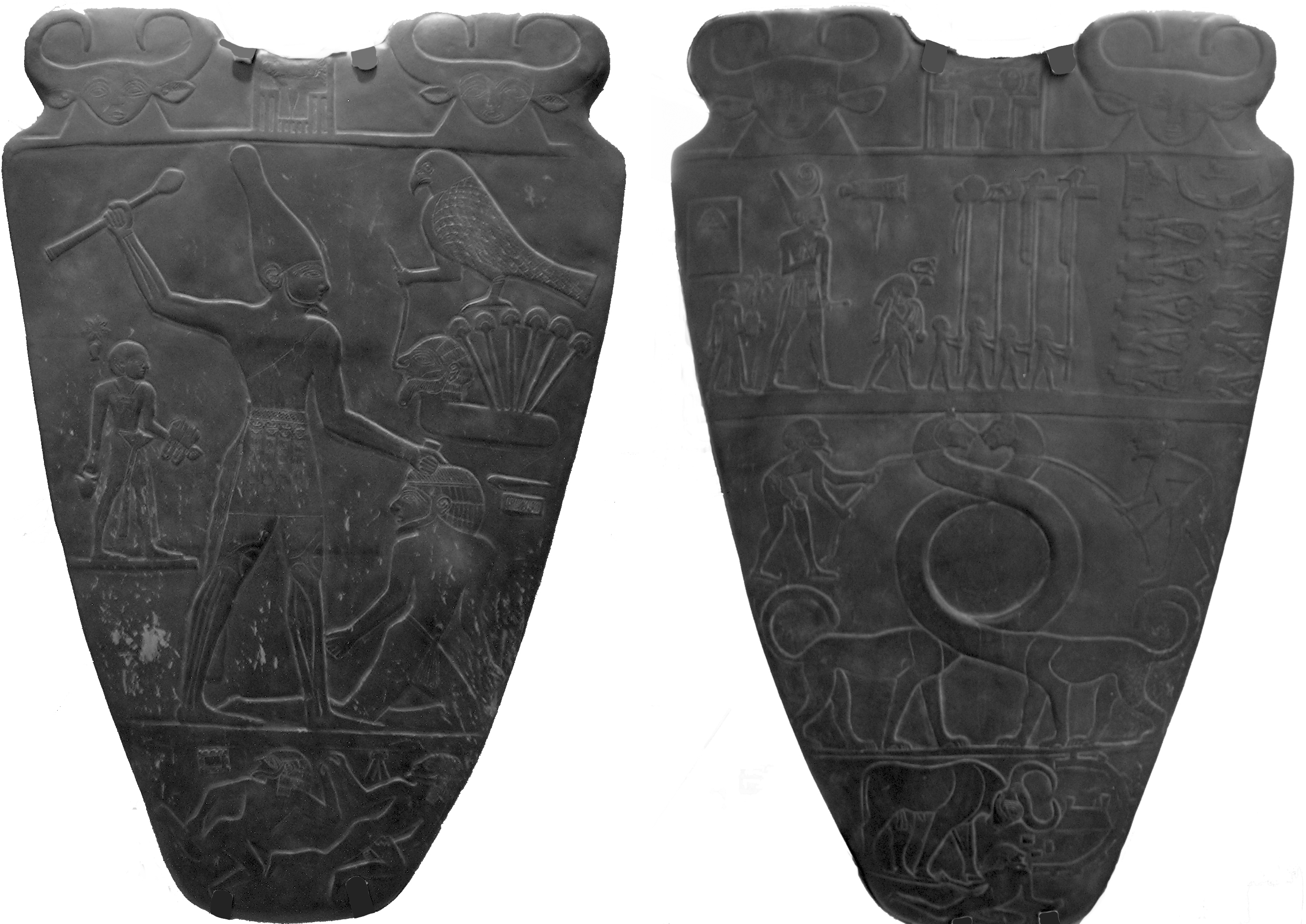
Figure 1 Source Link - The Narmer Palette -- Green Schist, Artist Unknown, c. 2950 BCE
Figure 2 Source Link - Judgement of Hunefer Before Osiris -- Painted Papyrus, Artist Unknown, c. 1285 BCE


QUESTION: How is it possible that what the Egyptians considered "completeness", could be misinterpreted as crude, naïve or unrealistic and how does it affect the “truth” contained in their art?


PART ONE:

SUMMARY: Before I settled on this question, I had been researching for Question #2a about the story of Adam and Eve and the Egyptian's beliefs about knowledge and immortality. Reading analyses of the allegory of the Genesis story (one I am very familiar with) gave me great insight about the interpretation of mythology in general. I then set my sights on Egypt to learn about their beliefs in immortality. I found the mythology fascinating and went through a series of revelations about how the Egyptians viewed the physical and spiritual world and their role in it. After all my reading, I finally understood what this question meant by the word "completeness" and realized that I wanted to answer this question more than the other question. Having the opportunity to immerse myself in the beliefs of ancient Egypt was a great experience.

REASON: The reason this question was asked is to open the mind of the writer to art and cultures that may seem at first glance simplistic or weird. These sorts of prejudices are useless if one wants to interpret and gain something from the art available to them rather than simply lament on the subjective quality of the work.

PURPOSE: The purpose of this question is to force the writer to really look at a piece of art and see its unique qualities and to see beyond stylistic quirks to the heart of an artist's message.

DIRECTION: By answering this question, I feel I have really broke through to a new level of understanding in terms of style and art on a cultural level. I feel much more confident in my ability to see through to the true meaning behind myths and how these concepts relate to the minds of those who create and view them.

IMPRESSIONS: I was not expecting to become so engulfed in the Egyptian side of Question #2a. I was expecting the major benefit of this research to be finally gain an understanding of the Adam and Eve myth and apply this skill to more biblical stories I am familiar with. Learning the Egyptians' beliefs in immortality was sort of wacky but in a fascinating way. Learning more about their religious stories, I saw so much in their art I had never seen before. It felt like my brain had been torn into a million pieces and reassembled as I thought about the meaning and implications of completeness and unity in their art. I have so much respect for Egyptian beliefs knowing what I know now and I am sure they are one of the greatest civilizations to ever put pen to papyrus.


PART TWO:

At the core of any successful design is one basic principle: unity. David Lauer suggests, "Unity is perhaps as close to a rule as art can approach." (Design Basics, David Lauer et al., Cengage Learning, 2011, p. 28) Based on their illustrations, some might consider the ancient Egyptians to have been obsessed with unity and order. Permeating many of their religious myths, for example, is the struggle between chaos and order. The first Egyptian god, Ra, is said to have come into being when he "shaped himself out of the waters of chaos." (Art History Volume 1 3rd ed., Marilyn Stokstad et al., Prentice Hall, 2008, p. 51) With the idea of unity as a driving force in mind, the message in these words and what they reveal about the collective Egyptian mind is powerful. The message here is that the being who preceded all else in existence was the first bringer of unity and integration to the naturally chaotic world.

Next, there is the story of Osiris, the god who first claimed kingship over Egypt. In a fit of jealousy, his brother, the god Seth, hacked Osiris to pieces. Learning of his death, the goddess Isis who was the wife of Osiris recruited her sister and Anubis, the god of embalming and death related activities, to help her reassemble her husband's corpse. After Osiris has been repaired, Isis bears him a son who is called Horus. Horus promptly defeats Seth to reclaim his father's kingship. Osiris, in his own right, becomes the king of the underworld. (Art History Volume 1 3rd ed., Marilyn Stokstad et al., Prentice Hall, 2008, p. 51-52)

The fact that Ra, Osiris, Isis and Horus are all lauded in these stories reveal much about the beliefs of ancient Egyptians. Notable to the story of Horus and Seth is that Horus was considered a force of good and Seth the god of chaos. (Art History Volume 1 4th ed., Marilyn Stokstad et al., Prentice Hall, 2010, p. 51, 61) Here again we see great attention paid to the tug-of-war game between chaos and order, a game which the Egyptians considered order to have won. In this sense, it is easy to understand why the Egyptians survived relatively unchanged for 3000 years, while countless civilizations around them came and went. (http://www.ancient-egypt.org/index.html) In the Egyptian mind, human beings were an island amidst a sea of chaos, fighting the good fight to bring order into a world that will devour anything that can be torn apart.

This complete aversion to chaos can be seen most clearly in the art of these people. Some may look upon works such as the Narmer Palette (figure 1) of the Early Dynastic Period and judge it to be crude. The simplistic representation of forms and ignorance for realistic perspective looks almost childish to a world exposed to the masterpieces of the Renaissance. (Exploring The Life, Myth, and Art of Ancient Egypt, Joann Fletcher, Rosen Publishing Group, 2009, p. 14) Furthermore, there is little emotion injected by the artist and stylistically it is not very different from the Judgment of Hunefer Before Osiris illustration (figure 2) created over a thousand years after the palette. (Art History Volume 1 4th ed., Marilyn Stokstad et al., Prentice Hall, 2010, p. 77) Using the same visual conventions for thousands of years might indicate to some a lack of artistic growth. It might be assumed that the Egyptians did not care to grow, that they were artistic slackers.

These interpretations grossly miss the statement the Egyptians were making with their work. The Egyptian style did not change for so long because their pictures weren't meant to be a display of artistic achievement. In the Common Rider song "Rough Redemption" it is said, "Style communicates the elements of a war." (http://www.softcom.net/users/twolter/lastwaverockers.html) This is an important piece of advice to keep in mind in regard to Egyptian visual art. At their core, these people were historians and storytellers. The war the Egyptians were fighting with their designs was the war between clarity and misunderstanding. Any good storyteller knows that it's all in presentation. No matter how funny the punchline or how hard-hitting the message, if the person or work telling that story fumbles with the details and the order in which they are presented, the story will never land. Not only must a story be presented well, but it also must be concise and appealingly assembled. In other words, "A deft handling of unity is decisive in holding a story together." (Design Basics, David Lauer et al., Cengage Learning, 2011, p. 52) When such important things needed to be said, Egyptians rested on a style so complete in its design that it would be nearly impossible for the message to be corrupted by poor presentation.

The Egyptians seem to have succeeded in this noble goal of clarity above all else. The level of detail seen in each visual piece from this civilization shows that no visual decision stone was left unturned. As one author puts it, "The Egyptians had a marvelous knack for distilling an idea to its purest form in an abstract and powerful way." (http://www.ptahhotep.com/articles/Narmer_palette.html) To illustrate this completeness found in their designs, we turn to an early work, the previously mentioned Narmer Palette. This carving was discovered in 1898 at a location thought to be the Pre-Dynastic capital of Upper Egypt. (http://www.ptahhotep.com/articles/Narmer_palette.html)

In this work, we see that the artist has utilized a number of sophisticated design cues to create a narrative. Commonly thought to show the unification of Egypt and its beginnings as a powerful nation-state, the large form of the King stands as a focal point in the center. (Art History Volume 1 4th ed., Marilyn Stokstad et al., Prentice Hall, 2010, p. 53) Above the figure, a word is written in phonetic hieroglyphs. (Art History Volume 1 4th ed., Marilyn Stokstad et al., Prentice Hall, 2010, p. 52) Here, proximity has been used to link this piece of information with the man below it. (Design Basics, David Lauer et al., Cengage Learning, 2011, p. 34) The viewer now understands that the name of this man is Narmer, the word written in the hieroglyphs. Proximity is also used in numerous items placed with this man that tell the viewer he is a king, such as the white crown of Upper Egypt. (Art History Volume 1 4th ed., Marilyn Stokstad et al., Prentice Hall, 2010, p. 53) Scale is also used in this piece to emphasize not only Narmer's social status, but also his importance within the narrative. (Art History Volume 1 4th ed., Marilyn Stokstad et al., Prentice Hall, 2010, p. 53) Along the same vein, it is noted that the foe kneeling before him is of comparable size to Narmer himself. It appears that the artist utilized scale in this way to make the viewer aware of the main characters in this story of how Narmer tamed Lower Egypt. Creating emphasis through position comes into play in many places in this design as well. (http://www.tersiiska.com/design/principles) We see the god Horus in the form of a falcon sitting above this foe, surrounded by a myriad of symbols associated with Lower Egypt. (Art History Volume 1 4th ed., Marilyn Stokstad et al., Prentice Hall, 2010, p. 53) Looking at this area, one can almost feel the oppressive weight of the god bearing down on the foe. Knowing that Horus is a force of good, this seems to suggest that the message of this narrative is that Upper Egypt's conquer of Lower Egypt was and should be regarded as good. To further support this conclusion, we turn to one more spot where position is key. Above the entire scene, we see the cow-goddess Hathor on either side of Narmer's name. (http://www.ptahhotep.com/articles/Narmer_palette.html) She appears to be making an optimistic facial expression. Hathor was the goddess of love and fertility. (Art History Volume 1 4th ed., Marilyn Stokstad et al., Prentice Hall, 2010, p. 74) Her happy presence above the entire scene seems to indicate that she is protecting the king and condoning his actions.

The amount of symbolic meaning to be found in this piece is phenomenal. The design is not alone in it's narrative richness either; these sort of scenes were commonly found all over Egypt and from every period. Perhaps this style feels simplistic, cluttered, and thoughtless to those who carelessly dismiss Egyptian art, but the level of narrative detail encoded in this composition and others like it proves that the Egyptians were anything but thoughtless or lazy with their visual art. Their ability to cut through the chaotic mess of detail and arrive at the heart of human struggle in its most complete form is incredible. This style of presentation, however simplistic, presents a formidable challenge to anyone attempting to make their name known in the pages of history books when it comes to the utilization of art as a form of communication and storytelling. For now, the Egyptian artistic legacy will live on unmatched as it has for the thousands of years since its creation.

Thursday, April 12, 2012

Topic Question Essay 4: Mother Earth, Fertility, Love and More?

Essay #1c
Mother Earth, Fertility, Love and More?

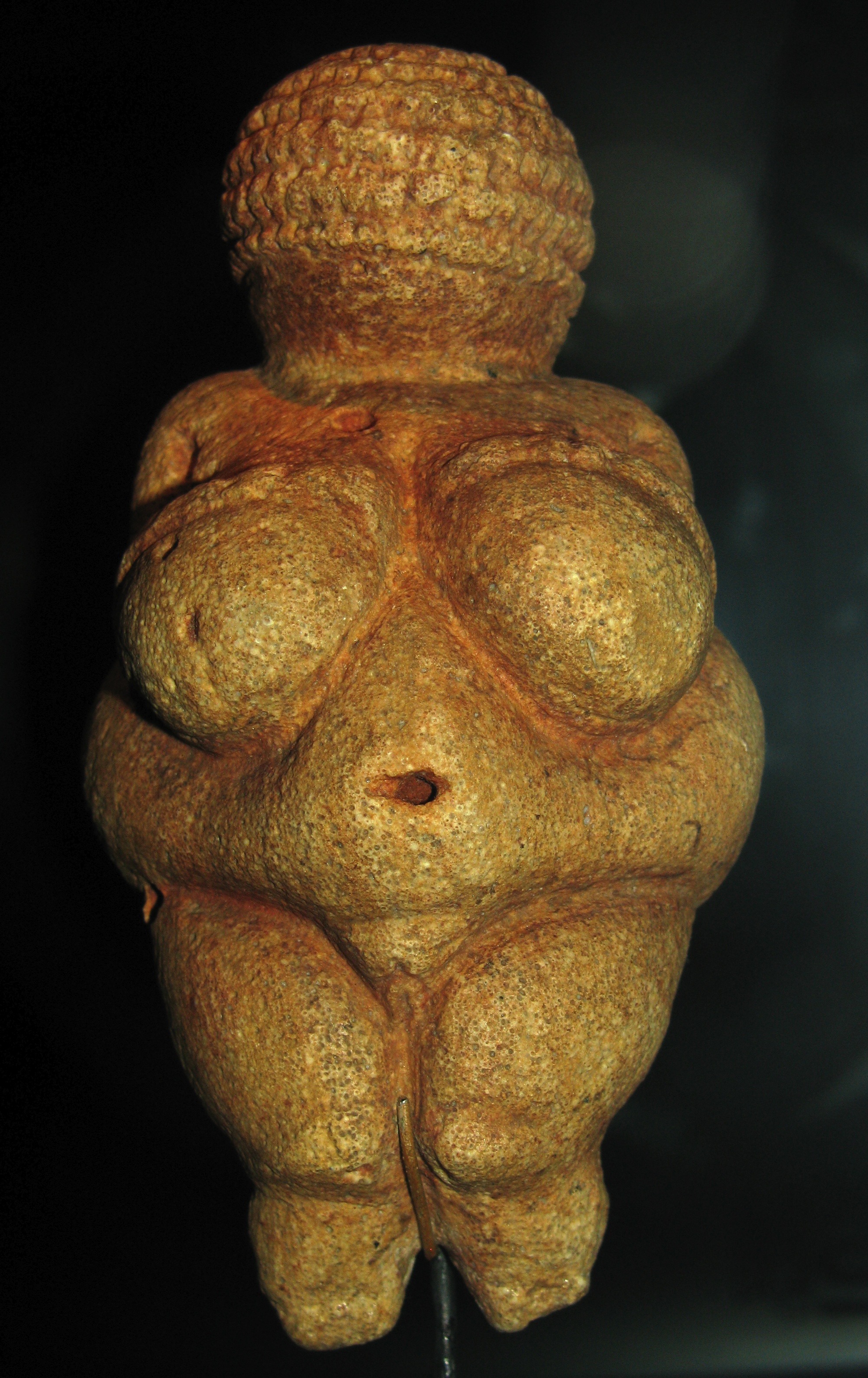
Figure 1 Source Link - Woman from Willendorf -- Limestone, Unknown Artist, c. 24000 BCE
Figure 2 Source Link - Venus De Milo -- Marble, Anonymous Greek Sculptor, c. 150 - 100 BCE
Figure 3 - Source Link - Venus of Urbino -- Oil on Canvas, Titian, 1538


QUESTION: Describe the functional purpose of the Venus of Willendorf and the Venus De Milo. How is their imagery similar? How is it different? Find a third Venus example to compare and contrast these two to and describe why you selected it.


PART ONE:


SUMMARY: My attempt to answer this question has really opened my eyes to how rife with meaning a simple depiction of one woman could be. It was challenging to choose only one direction to go with this paper but I am pleased with the road I did take with these pieces.

REASON: As mentioned in the summary, I think the reason this question was asked is to demonstrate that even the most seemingly simple pieces of art contain meaning.

PURPOSE: The purpose of this question is to force the writer to really look at a piece of art, to examine every detail and notice that nothing is there by accident. By examining these works, I now see the uniqueness between different nudes, even those that seem so similar that I barely noticed the differences at first.

DIRECTION: When I finally began to answer the question, I was torn between which angle to approach the topic. It was difficult to settle on just one interpretation for any of these works of art because even something as simple as the tiny Willendorf statue is rich with meaningful imagery. I went through many drafts of this paper, this final I feel most concisely outlines my views about how these artworks relate to traditional ideas of femininity.

IMPRESSIONS: In my attempt to answer this question, I felt almost overwhelmed with the memories of past books I have read on evolutionary psychology and human sexuality and this paper has absolutely renewed my interest in these subjects. It is also amazing to me how much meaning a simple pose can carry with it into the viewer's mind when they look at female nudes.


PART TWO:

Works of art commonly referred to as depicting a "Venus" may share a common link in their function as works viewable by others. The works illustrate the closeness of marketing concepts to art, in the sense that both fields tackle the human identity issues of their viewers. Many advertising strategies today focus not on a boring display of a product's empirical value, but rather the implications that product has on the social status of those using it. (Spent, Geoffrey Miller, Penguin, 2009, Kindle Edition, location 1285) If one keeps this in mind whilst viewing artistic representations of nude women, one of their reasons for being becomes clear.

Humans have many basic needs. One of our most primal needs is to fit in, to connect with other humans, to belong. (http://www.edpsycinteractive.org/topics/conation/maslow.html) This is not negotiable, but rather built into our complex brains. Humans are also clever animals and our brains have an relentlessness tendency to lay out the outcomes of any situation and play the odds. Forming relationships with people requires a time investment and our brains have even developed an efficiency strategy in this regard; humans can judge the attractiveness of a face and its features in one seventh of a second. (The Mating Mind, Geoffrey Miller, Anchor, 2000, p 204) The assessment of their entire appearance follows closely behind this initial glance. This sounds very basic but it is still impressive that we can make a judgment about what kind of a person an acquaintance may be in such a short timespan.

This system can be as flawed as it sounds at times, but for a discussion on the imagery of the female body it is a salient point. Aside from being efficient judges, humans are also rather biased judges. Not only do we regularly make snap judgments with little basis in reality, but we also often base our decisions to associate with these people on ideas about appearance we have absorbed from our peers. We think people who wear leather jackets are cool because the Fonz was cool and people who wear glasses are awkward because Steve Urkel was awkward.

In the Venus art pieces, we can see these preconceived notions at their genesis. Take the Venus of Willendorf (figure 1) for example. Discovered in Austria, this statue dates back to the prehistoric humans of 24,000 BCE. (Art History Volume 1 4th Ed, Marilyn Stokstad et al., Prentice Hall, 2010, p 6) The Willendorf woman, although seemingly simple, may reveal key ideas about femininity held by humans of this time. One might expect to look upon this statue with disgust, for at first glance she seems to be nothing more than a fat, bulbous woman. However, there is something oddly attractive about her ample breast and bulging belly. This attraction is likely linked to the impression that this woman is a healthy, well-nourished sort of fat rather than simply obese. (Art History Volume 1 4th Ed, Marilyn Stokstad et al., Prentice Hall, 2010, p 6) Focusing on where the artist chose to exaggerate her features, this effect is obviously no mistake. All of this woman's sex characteristics are enhanced to an almost unimaginable ideal for such a meager time in human history.

Survival was the everyday battle of all humans of this time period. The threat of starvation and hardship was always on the horizon for many. In such brutal conditions, the stakes were always high. Today people worry about finding a good spouse or companion and the only difference back then was different values and a survival drive dialed to eleven. (The Mating Mind, Geoffrey Miller, Anchor, 2000, p 186) The big question in the back of most humans' minds was almost certainly, "how do I find a mate who will produce children worth my time investment?" It may be cynical to lay it out that way but there is truth in those words. If one wanted to pass on their DNA for the continuity of their own genepool (a motivation fueling many animal's actions,) there was no time to waste on inadequate mate whose babies may not thrive.(The Mating Mind, Geoffrey Miller, Anchor, 2000, p 185)

This is where the concept of art as marketing returns to the spotlight. The Willendorf statue is that of a healthy, fertile woman. Not only that, but she seems rather free with her body, presenting her genitals for all to see. In a cave man's eyes, she was the perfect woman -- a willing and healthy partner. This piece is almost like a primitive advertisement for mothers, especially when one considers the popularity of the subject at the time. Similar statues from roughly the same time period have been found throughout the European continent. (Art History Volume 1 4th Ed, Marilyn Stokstad et al., Prentice Hall, 2010, p 7) It is almost as if the artists were trying to generate awareness for such mysteriously attractive women and convince viewers that the exaggerated features seen here should elevate women to a higher status within their society. The portability of this statue adds considerable weight to this theory, for it is only four inches tall. (Art History Volume 1 4th Ed, Marilyn Stokstad et al., Prentice Hall, 2010, p 6) It must have been important to the artist for this statue to be passed around for all others to see and admire. Male viewers would be inspired to seek the Willendorf woman's real life counterpart. Female viewers would be inspired to draw attention to these parts of themselves, knowing this is where power lies. Perhaps like Helen of Troy, wars were even fought over such impossibly beautiful women.

The second statue worth note on this subject of feminine ideals is the Venus de Milo or Aphrodite of Melos (figure 2.) This statue was created between 150 - 100 BCE and depicts a partially draped Aphrodite in a slightly contorted position. (Art History Volume 1 4th Ed, Marilyn Stokstad et al., Prentice Hall, 2010, p 157) Similar to the Willendorf, the De Milo's hips are quite accentuated. Some of this is her natural feature, but much of this is also dependent on the way she carries herself. The way her spine is curved causes her hip to project outward, creating a dramatic curve on one side. (Art History Volume 1 4th Ed, Marilyn Stokstad et al., Prentice Hall, 2010, p 157) The tension of this pose is carried to its extreme by the intricately detailed drapery just barely clinging to this area of her body, ready to fall at the slightest provocation.

An advertising trick that has survived into modern times is at play once again in this elegant statue. This trick would be the use of a celebrity model to "sell" an idea to the public. (Spent, Geoffrey Miller, Penguin, 2009, Kindle Edition, location 1481) In a Hellenized world, the goddess of love and beauty was about as high status as a woman could get. The sculptor has used her status as a shortcut to sell his idea of feminine attractiveness to viewers. In this case, the message about sexuality and sexual attention women might absorb from such a pose is that seduction is more than just the body, it is also in the way a woman acts. The Venus de Milo barely acknowledges her viewer but intentionally draws attention to the cloth that just barely covers her genitals, the most powerful part of her sexuality. Such a combination of action creates the idea in the male viewer's mind that she just might be attainable. Essentially, this Venus wins her man by playing hard to get.

Unlike the Willendorf, this sexual message is much more complicated but still fits with the time. In the first century Greek world, mate choice probably did not depend so heavily on genes alone. Such societies included Women would have to attract a husband of decent status who could provide for her and her offspring and men had to choose a wife that might positively contribute to his reputation. The Venus de Milo seems to balance this role as gracefully as she balances the draped fabric on her hips. She does not have any hyper exaggerated fertility features, but she works with what she has to gain the most power and turn the most heads. Her ability to garner admiration from all who gaze upon her relates to another advertising strategy: humans are drawn to exclusivity and the gauge by which one measures exclusivity is in the jealousy of those around him. An expensive sports car, for instance, is advertised in magazines whose main demographic cannot afford a product. The purpose is to create a buzz around the product. (Spent, Geoffrey Miller, Penguin, 2009, Kindle Edition, location 1496) Like the arbitrarily valuable car, her sexuality's ability to enhance her man's status can only be strengthened if she advertises herself so that others may gaze upon her with envy. The end result is that this Aphrodite has driven up her own value and status tremendously by simply displaying herself in such a way. For any woman looking for a husband in a society where marriage and socioeconomic status are intertwined these would be very important goals.

On a final note, we turn our attention to the painter Titian's Venus of Urbino (figure 3.) This 1538 painting is notable because it is unlike the other two pieces; an entirely different sort of attitude towards sexuality is present. Once again, although quite different from the previous poses, these ideas about female attractiveness fit the time quite well. During this century, the Renaissance was fresh in everybody's mind, especially in the painter's home land of Italy. (http://academic.brooklyn.cuny.edu/english/melani/cs6/ren.html) This time period marked significant changes in the thought patterns of society and Titian seems to have latched on to this to encourage a more liberated, empowering display of female sexuality.

The woman in this painting plays the part of a seductress, keenly aware of the power her own body holds over the viewer. The attitude of freedom and sexual control over her body practically oozes from every pore of the young model's perfect pale skin. She even bares her whole self completely uncovered, despite the ready availability of sheets to preserve her modesty. Unlike the faceless Willendorf statue who also bares herself in full, the Urbino Venus' eyes seductively confront the viewer while her hand leads the eye towards a second focus just by her genitals.  For these reasons, many have described this work as "unapologetically erotic." (http://en.wikipedia.org/w/index.php?title=Venus_of_Urbino&oldid=485594255) The woman in this painting is well proportioned, flawless, self-assured -- perfect by many's standards. She exudes a maturity and confidence with her femininity that surely a great deal of women wish to master. (Art History Volume II 4th Ed, Marilyn Stokstad et al., Prentice Hall, 2010, p 659)  It is hard to imagine the effect this painting had on women at the time but perhaps Titian's powerful image inspired more than a few to seize their own erotic power and become the goddess that the Venus of Urbino clearly is.

Thursday, March 8, 2012

Topic Question Essay 3: Faith and Belief

Essay #7a
Faith and Belief

Figure 1 Source Link - Statue of the Good Shepherd -- Marble, Unknown Artist, c. 300 CE


QUESTION: Is Art in any way, an intrinsic part of, or a primary factor in religion or religious expression and if so, how did it specifically play a part in the development of Christianity?


PART ONE

SUMMARY: This question was difficult to attempt. There was a lot of ground to cover and it is difficult to narrow the scope enough on response about religion that isn't rife with organizational errors. I focused on the communal aspect of religion and tried as best as I could to wade through all the information I took in, as not to stray off topic while answering this intriguing question.

REASON: The reason this question was asked is to force the responder to carefully examine the link between art and religion, which can not be taken for granted as it is an integral part of countless pieces studied throughout this course.

PURPOSE: This question is intended to allow the responder to put art in the context of the society and religion surrounding it and vice versa.

DIRECTION: There are so many aspects of art and religion that are interrelated, that it was hard to decide what angle to approach this paper from. I decided to examine the strength in community both art and religion uniquely provide, because both are an important part of my own life.

IMPRESSIONS: This question felt nearly impossible to answer. Religious belief is rather nebulous and many people are unable to examine its structure without any sort of personal bias. I was surprised to realize that I myself had overlooked the functional purpose of art in a religion and I feel more enlightened through my research.


PART TWO

Art and religion are human inventions. Like so many inventions, these two are linked by a common thread: their propensity to allow us to communicate with each other on a basic, human level. Notice the word communicate. One word that most closely resembles communication is community. A community can be summed up as a group of people who share similar beliefs and experiences. It seems that human beings need to feel a certain level of commonality with each other in order to function peacefully in an organized society. In fact, belonging and finding your place in society is so important to human beings that it appears on Maslow's hierarchy of needs. (http://www.edpsycinteractive.org/topics/conation/maslow.html)  This desire to relate to our fellow man may indeed be the basis for many religions.

The presence of community, or more specifically the lack thereof, can lead to the human mind turning in on itself. This was the case in one of the most brutal events in American history: the 36-hour New Mexico State Penitentiary riot of February 1980. This riot stands out for two loosely related reasons. The first is that the crimes committed against inmates and guards by other inmates were something for a horror movie. Men were brutally murdered with blowtorches among other actions that would seem almost inhuman. (http://www.sfreporter.com/santafe/blog-2534-36-hours-30-years-later-one-national-guardswomans-account-of-the-1980-prison-riot.html) The environment became so dangerous in the hours before the National Guard finally moved in and reinstated order that frightened inmates gathered together in the yard, seeking refuge. (http://www.abqjournal.com/cgi-bin/print_it.pl?page=/2000/nm/future/9fut09-19-99.htm) The second reason this riot stands out in history is much more difficult to understand in context of the immediate picture. Guard testimonies over their observations made on prison conditions beforehand reported that the administration had been warned repeatedly that a riot was imminent. (The Devil's Butcher Shop, Roger Morris, UNM Press, 1983, p. 17) Additionally, in later analyses of the incident, the dissolution of educational programs, increasing use of solitary confinement, and coercion of inmates by guards were all cited as major factors that contributed to the animosity between inmates and the sheer chaos during the riot itself. (http://www.lineofduty.com/the-blotter/110121-nm-prison-riot-30-yrs-ago-we-went-to-hell) How could these things have possibly contributed to the riot in any significant or immediate way? The answer is that the prison was overcrowded and uncomfortable and worse, devoid of any sort of communal atmosphere. In such a setting, people were not able to coexist in harmony. Some articles refer to the murderers and victims as "fellow inmates." (http://www.abqjournal.com/cgi-bin/print_it.pl?page=/2000/nm/future/9fut09-19-99.htm) However, in this environment prisoners were isolated from one another, sometimes physically and sometimes only in spirit; there was no fellowship among men in this prison. The communal atmosphere the social programs had in part created had suffocated and the satisfaction of their basic need to belong vanished. The men were not able to share in their burdens together and help each other through their rough times. With no way to connect on a human level with those around them, they seized an opportunity to manifest their building inner desire for destruction externally, committing some of the worst atrocities against one another.

Humans do not like chaos. This idea can be clearly understood through the principles of design, which reveal incredible effect unity or disunity can have on our mood when we view an aesthetic work. One of our biggest lines of defense against chaos in life is a sense of belonging and community. (Foundations of Art and Design, Lois Fichner-Rathus, Cengage Learning, 2011, p 190) One way to define community would be the unity of peoples through shared experiences. Without these elements in our lives, we would all be individual atoms floating in space, rather than a unified, functioning social body. The former was the state of the New Mexico State Penitentiary in the few years leading up to the riot. Christianity, much like Judaism, spread in a society of clashing cultural ideas and relative instability. By the time it began to take hold in the Roman Empire, the Empire itself was in limbo. (The Making of the West Volume 1 2nd Ed, Lynn Hunt et al., Bedford/St Martins, 2007, p 205) Perhaps the fervor for which many felt towards the newfound religion was a combination of a deep longing to breathe new life into the concept of a community and safeguard this new community from the factors that were causing the one it was replacing to buckle. This fits in with the preachings of Jesus, which are friendly to all who were willing to accept God's love, prince and pauper alike. (Art History Volume 1 4th Ed, Marilyn Stokstad et al., Prentice Hall, 2010, p 222) "Collectively, societies are better off when their members cooperate with each other to achieve common goals." ("Individual-Level Evidence for the Causes and Consequences of Social Capital," American Journal of Political Science, John Brehm and Wendy Rahn, July 1997, p. 999) Keeping this in mind, the timing of Christianity's formation is may merely be evidence of an desperate attempt to harmonize society a society falling into disunity.

The role art plays in religious participation is a vital one. Art allows people the chance for self expression, which in turn leads to the development of strong beliefs and identity. In this case, religious identity is cultivated. Artistic expression is a journey which allows those who create it and those who experience it to relate to one another on a common level, sharing and shaping the beliefs which unify them. Additionally, art allows us to manifest our more abstract beliefs in tangible reality and this is especially important to remember with regards to religion. (Art History Volume 1 4th Ed, Marilyn Stokstad et al., Prentice Hall, 2010, p 224) Without art, many aspects of religion would likely be too nebulous for many to understand because there would be external side to compliment the internal impression. (http://www.italianfuturism.org/manifestos/art-and-religion/)

In the world of the Roman Empire, a world where art was valued and found its way from one distant land to another with relative ease, art played a crucial role in reinforcing the shared beliefs of Christianity. In fact, surviving works of the budding religion suggest that artists were already re-purposing the imagery of Roman and Jewish art to demonstrate their most important concepts. (Art History Volume 1 4th Ed, Marilyn Stokstad et al., Prentice Hall, 2010, p 222) The Good Shepherd statue seen in Figure 1 is a prime example of the type of imagery Christians would borrow. (http://gbgm-umc.org/UMW/Bible/jcart.stm) This practice of assimilating the imagery of one tradition to another is called syncretism. (Art History Volume 1 4th Ed, Marilyn Stokstad et al., Prentice Hall, 2010, p 222) The Christians were already consciously and unconsciously playing to the commonalities they already shared, such as living in a Roman world and sometimes a Jewish setting. Through both their art and their religion (particularly the teachings of the bible,) Christians formed a common iconography to which they could relate to on a religious level, thus bounding them together and solidifying their community, while still allowing the artwork to exist independently to integrate them with their non-Christian neighbors. (Art History Volume 1 4th Ed, Marilyn Stokstad et al., Prentice Hall, 2010, p 224) There is no way to know how this religion might have suffered from the absence of art. Without art, Christians would neither have been able to effectively harmonize with the world they lived in nor relate to one another. Without these elements, it is unlikely that many religions could gain the level of popularity seen in Christianity.

Wednesday, February 22, 2012

Topic Question Essay 2: Perception and Reality

Essay #1b
Perception and Reality


Figure 1 Source Link - Waldeck Mayan Glyph Reproduction -- Unknown Media, Jean Frédéric Waldeck, 1838

Figure 2 Source Link - Stela 3 -- Carved Stone, Unknown Artist, Unknown Date
Figure 3 Source Link - Woman from Willendorf -- Limestone, Unknown Artist, c. 24000 BCE
Figure 4 Source Link - Figures of a Woman and a Man -- Ceramic, Unknown Artist, c. 4500 BCE

QUESTION: Is it possible for a modern viewer’s "perceptions" to either create or alter the "reality" of a specific Paleolithic, Mesolithic or Neolithic Period cave painting or carving?


PART ONE:

SUMMARY: My attempt to answer this question has revealed quite a bit to me about how perception shapes the way we humans experience the world. I better understand the limitations of my own brain when attempting to analyze a piece of art and use my knowledge of perception to my advantage in future interpretations.

REASON: The reason this question was asked was to force the writer to examine with a magnifying glass the biases that influence people who view and study art. The writer will recognize the limitations of art research by closely studying them through this question.

PURPOSE: The purpose of this question is to allow the writer to pick apart the individual ways perception can change reality and examine the realities created by these prejudices.

DIRECTION: In the course of answering this question, I was able to list

IMPRESSIONS: My research has convinced me to take any speculation on the art of prehistoric men with a grain of salt. It is surprising to discover all the different ways our own brains can trick us when we are looking at things and making interpretations. Researchers aren't exempt from these problems but they are also not obvious problems in the field at first glance. I am surprised at just how much understanding more about the way people perceive the world and art specifically has improved my own artistic process by using these neurological quirks to my advantage.


PART TWO:

Art historians and related scholars may believe that they are always searching for the objective truth
behind prehistoric life in the artifacts those peoples leave behind. However, a major blind spot has plagued the fields of past-human discovery, causing setbacks and misinformation to circulate. This blind spot is the bias historical researchers imposed on artwork by each researcher's own perceptions. It turns out that a modern man's context and presuppositions can certainly alter the entire reality of prehistoric men or even create a new reality for these peoples. A number of factors can influence the way a piece of early artwork is interpreted by modern man and thereby influence the conclusions made about the lives of those ancient humans.

Unfortunately, our brains can sometimes put up mental barriers that hinder our understanding of the intended meaning or use of a work of art. (New Perspectives on Prehistoric Art, "The Discovery and Study of Prehistoric Art", Günter Berghaus, Praeger Publishers, 2004, p. 5) In some instances where scant information is available, modern perceptions have been shown to actually create the reality of specific works. A serious obstacle in efforts to decipher the ancient Mayan writing, for instance, was getting past the initial archaeologist's inattention to his own personal biases. The glyphs of the Mayan tablets are primarily based on imagery, often animals. (Art History Volume 1 4th Ed, Marilyn Stokstad et al., Prentice Hall, 2010, p. 385) When people in the 1930's learned of the preserved images near the ruins at Palenque, a few copied them into notebooks, including French artist Jean-Frederick Waldeck. (http://www.pbs.org/wgbh/nova/ancient/cracking-maya-code.html) These sketches were circulated but scholars were at a complete loss deciphering the information contained in the tablets. Eventually the site was revisited and those researchers discovered that many of the sketches were flat out wrong. For example, many "reproductions" contained an obvious Hindu influence and depicted animals that did not live in South America. "Believing that Babylonians, Phoenicians or Hindus had built the Maya cities, Waldeck's drawings even included Indian elephants." (Fig. 1) (http://www.pbs.org/wgbh/nova/ancient/cracking-maya-code.html) Rather than depicting an unfamiliar reality objectively, the original sketch artist allowed both his experiences and unsubstantiated beliefs fill in the gaps that were not entirely clear about the Mayan imagery. In this case, modern mental barriers soiled an entire research field with inaccurate data for a number of years and created a "reality" of the Mayan civilization now known to be nothing but pure fantasy. (Fig. 2 depicts a real Mayan stela.)

If the history of a civilization as recent as the Maya became so jumbled by modern prejudices, it seems more than likely that our analyses of the art of the European Stone Age men may be similarly muddled. Those peoples lives are disconnected from us by tens of thousands of years in some cases, we already have little to go on. Some source images might never be fully understood because the modern people who recorded them with field sketches may have allowed a certain level of their own biases creep in. This is an especially salient point of caution for those analyzing works that are no longer available in original or photographic form, such as some wall paintings discovered at Neolithic village site in Turkey before the time of proper preservation techniques. As in the case of the Mayan glyphs, researchers can only rely on field sketches of earlier archaeologists because excavation destroyed the primary images. (Art History Volume 1 4th Ed, Marilyn Stokstad et al., Prentice Hall, 2010, p. 14)

Ignoring poor secondary sketches, accidentally biased modern speculation can alter the significance of a work in other ways. Interpretation of a piece of art and its subsequent artist can be drastically different based simply on what name it is given. One famous Stone Age statue in particular suffered this exact setback for a number of years. Today, the four inch stone figure of a plump woman with no feet or facial details has become known as the "Woman from Willendorf." When it was first discovered in Austria, however, the statue seen in Figure 3 was popularly identified as the "Venus of Willendorf." Although it was known as a "Venus" (as in the ideal Roman goddess of love and beauty,) there is little evidence to suggest that the Willendorf statue represented the ideal form of a woman. (Art History Volume 1 4th Ed, Marilyn Stokstad et al., Prentice Hall, 2010, p. 6) Today, scholars concede that the Willendorf sculpture could have had any number of different meanings. For example, the piece may have been a charm meant to boost owner's vitality. This would be due to the association between woman's life-giving ability and magical symbology, hence the exaggeration of womanly parts. (Art and Civilization, "The Origin of Art," G. Elliott Smith, Books for Libraries Press Inc, 1967, p. 39) Another theory suggest that the statue may have even been a simple self portrait by a pregnant woman who could see neither her feet nor her face. (Art History Volume 1 4th Ed, Marilyn Stokstad et al., Prentice Hall, 2010, p. 7) Art historians may never discover the true meaning of this statue or other "Venus"'s found in nearby regions. One fact is clear, however: By the seemingly innocent act of labeling an object for easy reference, archaeologists accidentally identified the object for others who viewed it, thereby setting the stage for years of distorted interpretations of prehistoric reality.

Artwork can also be interpreted differently based on position relative to each other. The frequent placement together of two ancient statues of a man and a woman sitting (Fig. 4), for example, highlights this cognitive limitation well. Although almost certainly created by the same artist, there is no way for modern viewers to know the significance the individuals had in relation to each other. Regardless, their stylistic similarity combined with an arrangement in which they face each other in close proximity is highly suggestive of a pensive couple. (Art History Volume 1 4th Ed, Marilyn Stokstad et al., Prentice Hall, 2010, p. 24) Often, our brains tend to reconcile the closeness of objects by assuming that they must be related. (Design Essentials for the Motion Media Artist, Angie Taylor, Elsevier Inc, 2011, p. 128) The tendency is not always a problem in itself; linking two unrelated objects forces our brains to compare them, thus experiencing both pieces in a completely novel way. In the context of prehistoric art, however, the tendency to rationalize a relationship between unrelated paintings may cloud our understanding of the facts, purpose, or meaning of the work.

A final note to consider is the relative paucity of artwork available to modern viewers from the men of 30,000 or even 5,000 years ago. The simple fact that only a tiny fraction of these works may come under our microscope likely skews our perceptions of the society as a whole. (Art History Volume 1 4th Ed, Marilyn Stokstad et al., Prentice Hall, 2010, p. 1) What we see is only a few small categories of all that ancient man created. This issue can be read more clearly through a simpler analogy: If the only dogs one has ever experienced are aggressive, then they will likely form the belief that all dogs are aggressive and graft that prejudice onto any future dogs they encountered. If they ever had to write about dogs or interpret their behavior, it would almost certainly be through a lens of perceived aggression as well. This tendency to process information in accordance with preconceived notions is one of the many well understood and inescapable cognitive biases of human beings. (http://www.sciencedaily.com/articles/l/list_of_cognitive_biases.htm)

The outlook on prehistoric research today appears to have greatly benefited from the discovery of our own neurological quirks. Art historians have been fighting against the old myths more than ever. Our most contemporary researchers have a greater understanding today of the various ways our brains may lead us astray in search of the truth and the prognosis on our understanding of ancient art has never looked better.

Wednesday, February 8, 2012

Topic Question Essay 1: Them and Us

Essay #1a

Them and Us

Figure 1 Source Link - The Great Black Bull -- Paint on Limestone, Unknown Artist, c. 15,000 BCE

Figure 2 Source Link - The Crossed Bison (Lascaux Cave) -- Paint on Limestone, Unknown Artist, c. 15,000 BCE


Figure 3 Source Link - Bison -- Unbaked Clay, Unknown Artist, c. 13,000 BCE


QUESTION: How artistically similar, or different, do you think prehistoric people were compared to modern man and, what singular force or need continues to drive the artistic needs and human expressions of the 21st century?


PART ONE:

SUMMARY: In my attempt to answer this question, I discovered my own feelings about making art that had previously been hidden from me. Through this paper and my research, I am better able to articulate what motivates me to create. I also learned to look at a work from the artist’s perspective, as the two are inseparably linked. I have a much greater appreciation for many works that I did not previously understand.

REASON: The reason this question was asked is to force the writer to question his own ideas about what art is and the role the artist plays in a work. This question is also meant to explore man’s origin as a creator and examine the sophistication of prehistoric art that may look rather simple at first glance.

PURPOSE: As stated in the reason, this question is intended to help the writer critically examine his preconceived notions about art, form a more full definition, and investigate why humans are driven to create it.

DIRECTION: In the course of answering this question, I was able to form a fuller and more articulate idea of how art is defined and what purpose it serves our brains. I also learned a great deal about how skillfully executed the art of prehistoric men were, especially cave paintings.

IMPRESSIONS: Before my research I had assumed, as most people do I am sure, that cave paintings are very simplistic and childlike. I now realize this has more to do with the materials available to these men, something I can sympathize with as an artist. I am sure that if they had the same advanced tools of the Ancient Greeks, the hunter-gatherers would have created "Venus de Milo"s of their own. I am also astonished at the amazing mind of Pablo Picasso, whose ideas I had never examined until my research for this essay.


PART TWO:

Upon examination of prehistoric peoples’ art, it appears that they shared similar thought processes to that of modern man. Prehistoric peoples of Europe left many traces of their artistic history for their ancestors to discover. Pictured in Figure 1 and Figure 2 are examples of the numerous paintings of assorted prey animals found on the walls of Lascaux Cave in southern France. Figure 1 depicts a bull and Figure 2 features two bison. These works are believed to have been created around 15,000 BCE. (Art History Volume 1 4th ed., Marilyn Stokstad et al., Prentice Hall, 2010, p. 9) Figure 3 shows a meticulously detailed clay sculpture of two bison discovered in a French region close to the Lascaux site. This work is dated to about 13,000 BCE. (Art History Volume 1 4th ed., Marilyn Stokstad et al., Prentice Hall, 2010, p. 12) The animals represented in these works and similar art found during this time period are shockingly true to life. The ancient artists appear to have taken great care to capture the essence of the beasts. Since the discovery of such beautiful sculptures and paintings, art historians have speculated that these peoples likely attributed magical qualities to this type of artwork. One theory suggests that the men believed that if they depicted something in their art, it would happen in reality. “It seems fairly certain that sympathetic magic was at the bottom of most of the cave drawings. Such magic decrees that the image of a being possesses such affinity with its original that an injury to one causes a corresponding injury to the other.” (Art and Civilization, “Prehistoric Art,” Dina Portway Dobson, Books for Libraries Press Inc, 1967, p. 51) Further indication of a magical connection can be found in the choices the artists made for the location of much of their cave work. Many sites where the paintings appear are rather inaccessible. Evidence of heavy foot traffic also indicates that these places were for ritual or group activities, once again suggesting that the paintings held some importance to the people. (Art History Volume 1 4th ed., Marilyn Stokstad et al., Prentice Hall, 2010, p. 9)

Today, men might scoff at the thought of painting a bison in order to capture it in the real world. This connection to the mystical and magical, he will say, is absurd and has been since science has delivered us from our struggle to understand and control our world. However, the thought process behind these beliefs may be more nuanced than humans of today are aware. To many, the magic in their art may be hiding in plain sight, for they can’t quite articulate it. Regardless, an artist’s belief in his own paintings and their “supernatural” power seems to persist as a common thread between the minds of at least a few recent masters. For example, Jackson Pollock, commenting on his painting entitled “Full Fathom Five,” began a speech with the telling phrase, “When I am in my painting…” Pollock speaks of his painting as if it were a real living thing, adding, “The painting has a life of its own." (http://quote.robertgenn.com/auth_search.php?authid=73) Some may view that quote as a simple turn of phrase, but perhaps Pollock was articulating something special about the relationship between artwork and any man, prehistoric or contemporary. Turning to another master of recent decades, Pablo Picasso once said of his artistic process, “It is necessary that I live my work.” (Picasso on Art: A Selection of Views, Dore Ashton, Viking Press, 1972, p. 84) Picasso too seems to imply that his work takes on a form of life deeply connected but distinctly separate from his own. If we are to trust the thought processes of our own highly regarded contemporaries, it is safe to speculate that prehistoric men really did feel a sort of magic in their work. Regardless of whether the sympathetic magic theory is spot on, at the very least ancient men may have felt as if they were capturing or even creating a soul in these hyper-realistic depictions. This may also explain why such hard to reach areas were chosen to display these works. The men wanted the animal to persist beyond its physical life, into the life of a painting permanently hidden deep in a cave. In this way, the spirits are truly immortalized because art is considered to be a persisting event that can be experienced as long as it survives. (Art Through the Ages 5th ed., Helen Gardner, Harcourt, Brace and World, 1970, p. 2)

On the topic of what drove these men and all humans to create art, our living creations, aesthetic sense does not seem to be the key. It is true that men strive to bring visual balance and harmony to their creations and admire these qualities when they are present in nature, but this is not a uniquely human trait. There are unrelated species throughout the animal kingdom that appear to admire nature’s aesthetic oddities, such as the bowerbird who collects all manner of peculiar artifacts and displays them outside its home. (Larousse Encyclopedia of Prehistoric and Ancient Art, René Huyghe et al., Prometheus Press, 1962, p. 27) For this reason, man’s motivation to create art must not lie in simple aesthetics, but instead in a unique desire to express himself and discover a clear picture of his own identity. This explanation seems to be a vital factor in understanding the thousands of human depictions prehistoric peoples left behind, as the human form is the core of an individual’s identity. (Art History Volume 1 4th ed., Marilyn Stokstad et al., Prentice Hall, 2010, p. 21)

To understand these motivations, it must be stated what art is in the simplest terms. Art can be defined as an emotional expression among other definitions. This “artistic impulse” appears to be present in not only the creators of art, but its viewers as well. (Art and Civilization, “Prehistoric Art,” Dina Portway Dobson, Books for Libraries Press Inc, 1967, 51) The theory that prehistoric man was simply attempting to literally capture buffalo with magical help from his cave drawings does not discount this view of art as emotional self-expression. After all, most humans share a primal desire to survive. The various cave paintings and sculptures of animals can be seen in this light as an important aspect of hunter-gatherer survival. (Art History Volume 1 4th ed., Marilyn Stokstad et al., Prentice Hall, 2010, 1) To survive would have been impossible if ancient hunters failed to capture their prey, some of which were, coincidently, the subject of their people’s works. (Art History Volume 1 4th ed., Marilyn Stokstad et al., Prentice Hall, 2010, p. 13) The prey art, depictions of the life-givers, was the outlet through which these men expressed their deep, emotional aversion to death; Whether the hunter-gatherers were conscious of this connection is unimportant. The fact is simple: when a person saw these pictures of animals so realistically depicted that they were practically living on the walls of this cave, he felt hope and security.

Identity development plays a crucial role in understanding the human need to express. Once again we turn to Picasso who said, “The inner I is inevitably in my painting, since it is I who make it.” (Picasso on Art: A Selection of Views, Dore Ashton, Viking Press, 1972, p. 47) The desire to express one’s own identity, cultural or individual, is certainly featured in the Lascaux Painting. The animals here are immortalized out of respect and worship from the people they sustain. This idea would not be terribly unusual; many culture’s identities are wrapped up in the specific life-giving resources of their region. For example, Ancient Greek civilization is heavily associated with olives and this food and wood source appears numerous times throughout their artistic works and mythologies. Relating back to the mystical element of art, the Ancient Greeks believed their native olive tree, which provided them so many resources, was a gift to Athens from the goddess Athena. (Art History Volume 1 4th Ed, Marilyn Stokstad et al., Prentice Hall, 2010, p. 136)

Man cannot escape his need to form an identity through expression. It is all around us. Evidence of this need is seen not only in our paintings and sculptures, but also through the hundreds of languages humans have developed throughout history. People that live in different regions of the world develop their own words and dialects. Typically, cultures will fiercely defend and glorify their language as part of an important group identity. For example, Jamaicans consider their language to be a crucial form of self-expression. (http://www.globalexchange.org/country/jamaica/language) Why would maintaining their personal connection to a language be such a big deal? The answer is that language, like art, is a creation. The people are defending their own group creation, which has shaped and given them identity for centuries or sometimes millennia. Discovering identity through self-expression appears to be a recurrent theme throughout human artistic history, among other endeavors, and will continue to drive us as long as we continue on with our current, unaltered human nature.