Mother Earth, Fertility, Love and More?
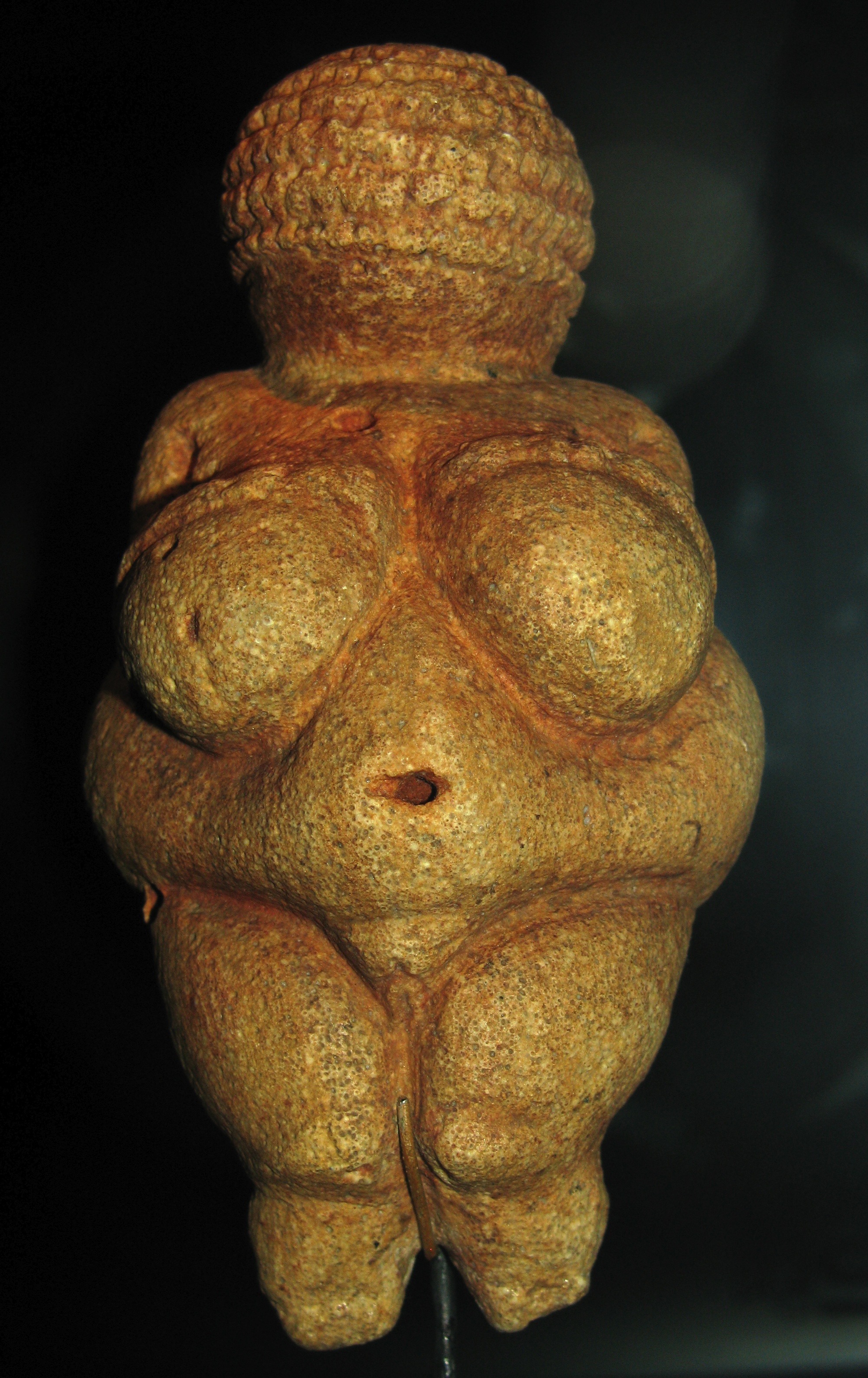 |
| Figure 1 Source Link - Woman from Willendorf -- Limestone, Unknown Artist, c. 24000 BCE |
 |
| Figure 2 Source Link - Venus De Milo -- Marble, Anonymous Greek Sculptor, c. 150 - 100 BCE |
 |
| Figure 3 - Source Link - Venus of Urbino -- Oil on Canvas, Titian, 1538 |
QUESTION: Describe the functional purpose of the Venus of Willendorf and the Venus De Milo. How is their imagery similar? How is it different? Find a third Venus example to compare and contrast these two to and describe why you selected it.
PART ONE:
SUMMARY: My attempt to answer this question has really opened my eyes to how rife with meaning a simple depiction of one woman could be. It was challenging to choose only one direction to go with this paper but I am pleased with the road I did take with these pieces.
REASON: As mentioned in the summary, I think the reason this question was asked is to demonstrate that even the most seemingly simple pieces of art contain meaning.
PURPOSE: The purpose of this question is to force the writer to really look at a piece of art, to examine every detail and notice that nothing is there by accident. By examining these works, I now see the uniqueness between different nudes, even those that seem so similar that I barely noticed the differences at first.
DIRECTION: When I finally began to answer the question, I was torn between which angle to approach the topic. It was difficult to settle on just one interpretation for any of these works of art because even something as simple as the tiny Willendorf statue is rich with meaningful imagery. I went through many drafts of this paper, this final I feel most concisely outlines my views about how these artworks relate to traditional ideas of femininity.
IMPRESSIONS: In my attempt to answer this question, I felt almost overwhelmed with the memories of past books I have read on evolutionary psychology and human sexuality and this paper has absolutely renewed my interest in these subjects. It is also amazing to me how much meaning a simple pose can carry with it into the viewer's mind when they look at female nudes.
PART TWO:
Works of art commonly referred to as depicting a "Venus" may share a common link in their function as works viewable by others. The works illustrate the closeness of marketing concepts to art, in the sense that both fields tackle the human identity issues of their viewers. Many advertising strategies today focus not on a boring display of a product's empirical value, but rather the implications that product has on the social status of those using it. (Spent, Geoffrey Miller, Penguin, 2009, Kindle Edition, location 1285) If one keeps this in mind whilst viewing artistic representations of nude women, one of their reasons for being becomes clear.
Humans have many basic needs. One of our most primal needs is to fit in, to connect with other humans, to belong. (http://www.edpsycinteractive.org/topics/conation/maslow.html) This is not negotiable, but rather built into our complex brains. Humans are also clever animals and our brains have an relentlessness tendency to lay out the outcomes of any situation and play the odds. Forming relationships with people requires a time investment and our brains have even developed an efficiency strategy in this regard; humans can judge the attractiveness of a face and its features in one seventh of a second. (The Mating Mind, Geoffrey Miller, Anchor, 2000, p 204) The assessment of their entire appearance follows closely behind this initial glance. This sounds very basic but it is still impressive that we can make a judgment about what kind of a person an acquaintance may be in such a short timespan.
This system can be as flawed as it sounds at times, but for a discussion on the imagery of the female body it is a salient point. Aside from being efficient judges, humans are also rather biased judges. Not only do we regularly make snap judgments with little basis in reality, but we also often base our decisions to associate with these people on ideas about appearance we have absorbed from our peers. We think people who wear leather jackets are cool because the Fonz was cool and people who wear glasses are awkward because Steve Urkel was awkward.
In the Venus art pieces, we can see these preconceived notions at their genesis. Take the Venus of Willendorf (figure 1) for example. Discovered in Austria, this statue dates back to the prehistoric humans of 24,000 BCE. (Art History Volume 1 4th Ed, Marilyn Stokstad et al., Prentice Hall, 2010, p 6) The Willendorf woman, although seemingly simple, may reveal key ideas about femininity held by humans of this time. One might expect to look upon this statue with disgust, for at first glance she seems to be nothing more than a fat, bulbous woman. However, there is something oddly attractive about her ample breast and bulging belly. This attraction is likely linked to the impression that this woman is a healthy, well-nourished sort of fat rather than simply obese. (Art History Volume 1 4th Ed, Marilyn Stokstad et al., Prentice Hall, 2010, p 6) Focusing on where the artist chose to exaggerate her features, this effect is obviously no mistake. All of this woman's sex characteristics are enhanced to an almost unimaginable ideal for such a meager time in human history.
Survival was the everyday battle of all humans of this time period. The threat of starvation and hardship was always on the horizon for many. In such brutal conditions, the stakes were always high. Today people worry about finding a good spouse or companion and the only difference back then was different values and a survival drive dialed to eleven. (The Mating Mind, Geoffrey Miller, Anchor, 2000, p 186) The big question in the back of most humans' minds was almost certainly, "how do I find a mate who will produce children worth my time investment?" It may be cynical to lay it out that way but there is truth in those words. If one wanted to pass on their DNA for the continuity of their own genepool (a motivation fueling many animal's actions,) there was no time to waste on inadequate mate whose babies may not thrive.(The Mating Mind, Geoffrey Miller, Anchor, 2000, p 185)
This is where the concept of art as marketing returns to the spotlight. The Willendorf statue is that of a healthy, fertile woman. Not only that, but she seems rather free with her body, presenting her genitals for all to see. In a cave man's eyes, she was the perfect woman -- a willing and healthy partner. This piece is almost like a primitive advertisement for mothers, especially when one considers the popularity of the subject at the time. Similar statues from roughly the same time period have been found throughout the European continent. (Art History Volume 1 4th Ed, Marilyn Stokstad et al., Prentice Hall, 2010, p 7) It is almost as if the artists were trying to generate awareness for such mysteriously attractive women and convince viewers that the exaggerated features seen here should elevate women to a higher status within their society. The portability of this statue adds considerable weight to this theory, for it is only four inches tall. (Art History Volume 1 4th Ed, Marilyn Stokstad et al., Prentice Hall, 2010, p 6) It must have been important to the artist for this statue to be passed around for all others to see and admire. Male viewers would be inspired to seek the Willendorf woman's real life counterpart. Female viewers would be inspired to draw attention to these parts of themselves, knowing this is where power lies. Perhaps like Helen of Troy, wars were even fought over such impossibly beautiful women.
The second statue worth note on this subject of feminine ideals is the Venus de Milo or Aphrodite of Melos (figure 2.) This statue was created between 150 - 100 BCE and depicts a partially draped Aphrodite in a slightly contorted position. (Art History Volume 1 4th Ed, Marilyn Stokstad et al., Prentice Hall, 2010, p 157) Similar to the Willendorf, the De Milo's hips are quite accentuated. Some of this is her natural feature, but much of this is also dependent on the way she carries herself. The way her spine is curved causes her hip to project outward, creating a dramatic curve on one side. (Art History Volume 1 4th Ed, Marilyn Stokstad et al., Prentice Hall, 2010, p 157) The tension of this pose is carried to its extreme by the intricately detailed drapery just barely clinging to this area of her body, ready to fall at the slightest provocation.
An advertising trick that has survived into modern times is at play once again in this elegant statue. This trick would be the use of a celebrity model to "sell" an idea to the public. (Spent, Geoffrey Miller, Penguin, 2009, Kindle Edition, location 1481) In a Hellenized world, the goddess of love and beauty was about as high status as a woman could get. The sculptor has used her status as a shortcut to sell his idea of feminine attractiveness to viewers. In this case, the message about sexuality and sexual attention women might absorb from such a pose is that seduction is more than just the body, it is also in the way a woman acts. The Venus de Milo barely acknowledges her viewer but intentionally draws attention to the cloth that just barely covers her genitals, the most powerful part of her sexuality. Such a combination of action creates the idea in the male viewer's mind that she just might be attainable. Essentially, this Venus wins her man by playing hard to get.
Unlike the Willendorf, this sexual message is much more complicated but still fits with the time. In the first century Greek world, mate choice probably did not depend so heavily on genes alone. Such societies included Women would have to attract a husband of decent status who could provide for her and her offspring and men had to choose a wife that might positively contribute to his reputation. The Venus de Milo seems to balance this role as gracefully as she balances the draped fabric on her hips. She does not have any hyper exaggerated fertility features, but she works with what she has to gain the most power and turn the most heads. Her ability to garner admiration from all who gaze upon her relates to another advertising strategy: humans are drawn to exclusivity and the gauge by which one measures exclusivity is in the jealousy of those around him. An expensive sports car, for instance, is advertised in magazines whose main demographic cannot afford a product. The purpose is to create a buzz around the product. (Spent, Geoffrey Miller, Penguin, 2009, Kindle Edition, location 1496) Like the arbitrarily valuable car, her sexuality's ability to enhance her man's status can only be strengthened if she advertises herself so that others may gaze upon her with envy. The end result is that this Aphrodite has driven up her own value and status tremendously by simply displaying herself in such a way. For any woman looking for a husband in a society where marriage and socioeconomic status are intertwined these would be very important goals.
On a final note, we turn our attention to the painter Titian's Venus of Urbino (figure 3.) This 1538 painting is notable because it is unlike the other two pieces; an entirely different sort of attitude towards sexuality is present. Once again, although quite different from the previous poses, these ideas about female attractiveness fit the time quite well. During this century, the Renaissance was fresh in everybody's mind, especially in the painter's home land of Italy. (http://academic.brooklyn.cuny.edu/english/melani/cs6/ren.html) This time period marked significant changes in the thought patterns of society and Titian seems to have latched on to this to encourage a more liberated, empowering display of female sexuality.
The woman in this painting plays the part of a seductress, keenly aware of the power her own body holds over the viewer. The attitude of freedom and sexual control over her body practically oozes from every pore of the young model's perfect pale skin. She even bares her whole self completely uncovered, despite the ready availability of sheets to preserve her modesty. Unlike the faceless Willendorf statue who also bares herself in full, the Urbino Venus' eyes seductively confront the viewer while her hand leads the eye towards a second focus just by her genitals. For these reasons, many have described this work as "unapologetically erotic." (http://en.wikipedia.org/w/index.php?title=Venus_of_Urbino&oldid=485594255) The woman in this painting is well proportioned, flawless, self-assured -- perfect by many's standards. She exudes a maturity and confidence with her femininity that surely a great deal of women wish to master. (Art History Volume II 4th Ed, Marilyn Stokstad et al., Prentice Hall, 2010, p 659) It is hard to imagine the effect this painting had on women at the time but perhaps Titian's powerful image inspired more than a few to seize their own erotic power and become the goddess that the Venus of Urbino clearly is.

SAM - Wow! You said, "...humans are also rather biased judges. Not only do we regularly make snap judgments with little basis in reality, but we also often base our decisions to associate with these people on ideas about appearance we have absorbed from our peers." It's logic versus emotion and individualism versus the tribe. It's, "a tale as old as time - beauty and the beast." If you added one more Venus into the mix it would be Manet's Olympia, which was based on the Urbino Venus. Imagine a scandal surrounding a nude woman in Paris - almost inconceivable but Manet managed to strip away many conventions about femininity, beauty and sexuality. Anyway, on a scale of 1 to 4 - yeah, this was a 4!
ReplyDelete