Essay #1b
Perception and Reality
 |
| Figure 1 Source Link - Waldeck Mayan Glyph Reproduction -- Unknown Media, Jean Frédéric Waldeck, 1838 |
 |
| Figure 2 Source Link - Stela 3 -- Carved Stone, Unknown Artist, Unknown Date |
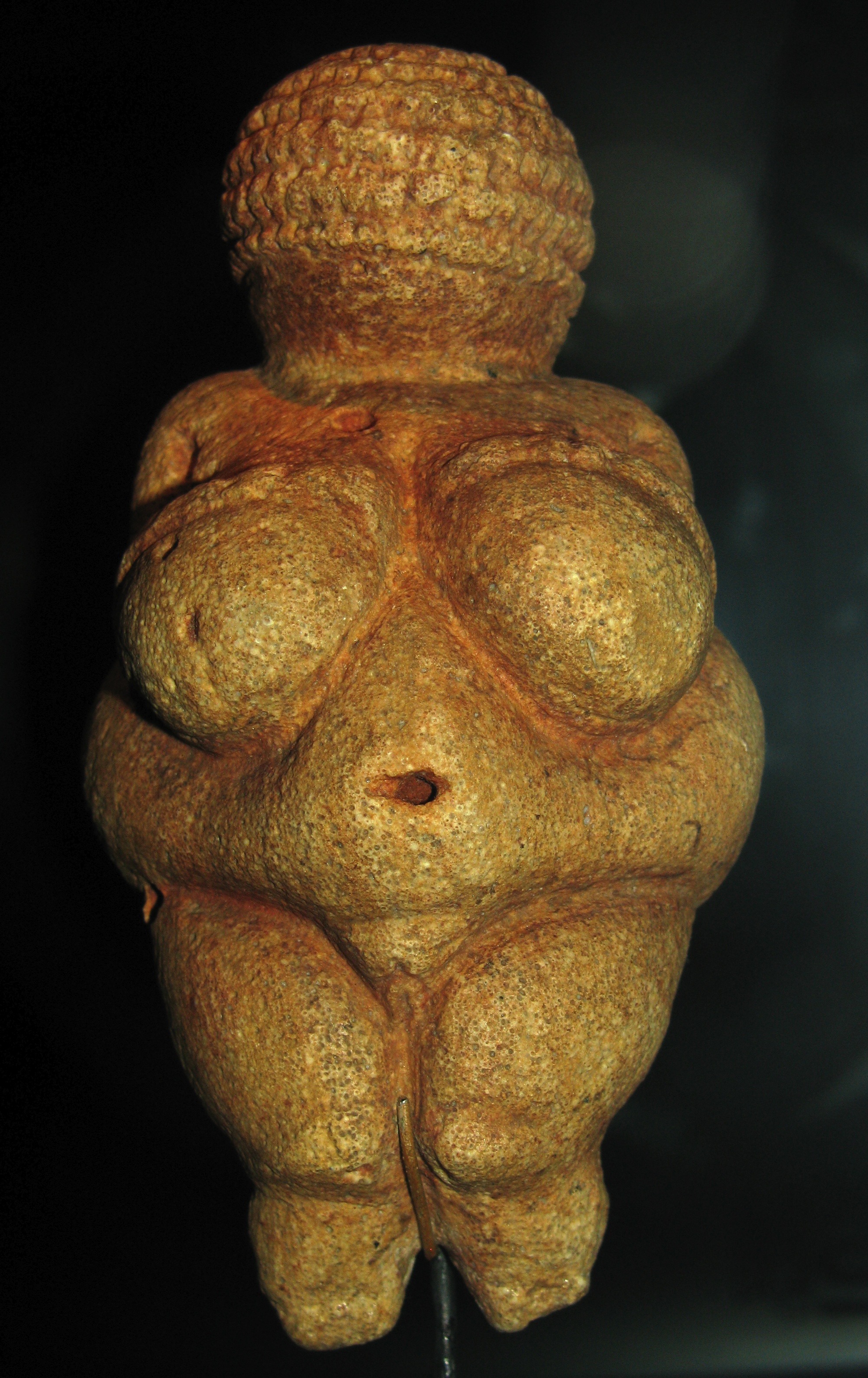 |
| Figure 3 Source Link - Woman from Willendorf -- Limestone, Unknown Artist, c. 24000 BCE |
 |
| Figure 4 Source Link - Figures of a Woman and a Man -- Ceramic, Unknown Artist, c. 4500 BCE |
PART ONE:
SUMMARY: My attempt to answer this question has revealed quite a bit to me about how perception shapes the way we humans experience the world. I better understand the limitations of my own brain when attempting to analyze a piece of art and use my knowledge of perception to my advantage in future interpretations.
REASON: The reason this question was asked was to force the writer to examine with a magnifying glass the biases that influence people who view and study art. The writer will recognize the limitations of art research by closely studying them through this question.
PURPOSE: The purpose of this question is to allow the writer to pick apart the individual ways perception can change reality and examine the realities created by these prejudices.
DIRECTION: In the course of answering this question, I was able to list
IMPRESSIONS: My research has convinced me to take any speculation on the art of prehistoric men with a grain of salt. It is surprising to discover all the different ways our own brains can trick us when we are looking at things and making interpretations. Researchers aren't exempt from these problems but they are also not obvious problems in the field at first glance. I am surprised at just how much understanding more about the way people perceive the world and art specifically has improved my own artistic process by using these neurological quirks to my advantage.
PART TWO:
Art historians and related scholars may believe that they are always searching for the objective truth
behind prehistoric life in the artifacts those peoples leave behind. However, a major blind spot has plagued the fields of past-human discovery, causing setbacks and misinformation to circulate. This blind spot is the bias historical researchers imposed on artwork by each researcher's own perceptions. It turns out that a modern man's context and presuppositions can certainly alter the entire reality of prehistoric men or even create a new reality for these peoples. A number of factors can influence the way a piece of early artwork is interpreted by modern man and thereby influence the conclusions made about the lives of those ancient humans.
Unfortunately, our brains can sometimes put up mental barriers that hinder our understanding of the intended meaning or use of a work of art. (New Perspectives on Prehistoric Art, "The Discovery and Study of Prehistoric Art", Günter Berghaus, Praeger Publishers, 2004, p. 5) In some instances where scant information is available, modern perceptions have been shown to actually create the reality of specific works. A serious obstacle in efforts to decipher the ancient Mayan writing, for instance, was getting past the initial archaeologist's inattention to his own personal biases. The glyphs of the Mayan tablets are primarily based on imagery, often animals. (Art History Volume 1 4th Ed, Marilyn Stokstad et al., Prentice Hall, 2010, p. 385) When people in the 1930's learned of the preserved images near the ruins at Palenque, a few copied them into notebooks, including French artist Jean-Frederick Waldeck. (http://www.pbs.org/wgbh/nova/ancient/cracking-maya-code.html) These sketches were circulated but scholars were at a complete loss deciphering the information contained in the tablets. Eventually the site was revisited and those researchers discovered that many of the sketches were flat out wrong. For example, many "reproductions" contained an obvious Hindu influence and depicted animals that did not live in South America. "Believing that Babylonians, Phoenicians or Hindus had built the Maya cities, Waldeck's drawings even included Indian elephants." (Fig. 1) (http://www.pbs.org/wgbh/nova/ancient/cracking-maya-code.html) Rather than depicting an unfamiliar reality objectively, the original sketch artist allowed both his experiences and unsubstantiated beliefs fill in the gaps that were not entirely clear about the Mayan imagery. In this case, modern mental barriers soiled an entire research field with inaccurate data for a number of years and created a "reality" of the Mayan civilization now known to be nothing but pure fantasy. (Fig. 2 depicts a real Mayan stela.)
If the history of a civilization as recent as the Maya became so jumbled by modern prejudices, it seems more than likely that our analyses of the art of the European Stone Age men may be similarly muddled. Those peoples lives are disconnected from us by tens of thousands of years in some cases, we already have little to go on. Some source images might never be fully understood because the modern people who recorded them with field sketches may have allowed a certain level of their own biases creep in. This is an especially salient point of caution for those analyzing works that are no longer available in original or photographic form, such as some wall paintings discovered at Neolithic village site in Turkey before the time of proper preservation techniques. As in the case of the Mayan glyphs, researchers can only rely on field sketches of earlier archaeologists because excavation destroyed the primary images. (Art History Volume 1 4th Ed, Marilyn Stokstad et al., Prentice Hall, 2010, p. 14)
Ignoring poor secondary sketches, accidentally biased modern speculation can alter the significance of a work in other ways. Interpretation of a piece of art and its subsequent artist can be drastically different based simply on what name it is given. One famous Stone Age statue in particular suffered this exact setback for a number of years. Today, the four inch stone figure of a plump woman with no feet or facial details has become known as the "Woman from Willendorf." When it was first discovered in Austria, however, the statue seen in Figure 3 was popularly identified as the "Venus of Willendorf." Although it was known as a "Venus" (as in the ideal Roman goddess of love and beauty,) there is little evidence to suggest that the Willendorf statue represented the ideal form of a woman. (Art History Volume 1 4th Ed, Marilyn Stokstad et al., Prentice Hall, 2010, p. 6) Today, scholars concede that the Willendorf sculpture could have had any number of different meanings. For example, the piece may have been a charm meant to boost owner's vitality. This would be due to the association between woman's life-giving ability and magical symbology, hence the exaggeration of womanly parts. (Art and Civilization, "The Origin of Art," G. Elliott Smith, Books for Libraries Press Inc, 1967, p. 39) Another theory suggest that the statue may have even been a simple self portrait by a pregnant woman who could see neither her feet nor her face. (Art History Volume 1 4th Ed, Marilyn Stokstad et al., Prentice Hall, 2010, p. 7) Art historians may never discover the true meaning of this statue or other "Venus"'s found in nearby regions. One fact is clear, however: By the seemingly innocent act of labeling an object for easy reference, archaeologists accidentally identified the object for others who viewed it, thereby setting the stage for years of distorted interpretations of prehistoric reality.
Artwork can also be interpreted differently based on position relative to each other. The frequent placement together of two ancient statues of a man and a woman sitting (Fig. 4), for example, highlights this cognitive limitation well. Although almost certainly created by the same artist, there is no way for modern viewers to know the significance the individuals had in relation to each other. Regardless, their stylistic similarity combined with an arrangement in which they face each other in close proximity is highly suggestive of a pensive couple. (Art History Volume 1 4th Ed, Marilyn Stokstad et al., Prentice Hall, 2010, p. 24) Often, our brains tend to reconcile the closeness of objects by assuming that they must be related. (Design Essentials for the Motion Media Artist, Angie Taylor, Elsevier Inc, 2011, p. 128) The tendency is not always a problem in itself; linking two unrelated objects forces our brains to compare them, thus experiencing both pieces in a completely novel way. In the context of prehistoric art, however, the tendency to rationalize a relationship between unrelated paintings may cloud our understanding of the facts, purpose, or meaning of the work.
A final note to consider is the relative paucity of artwork available to modern viewers from the men of 30,000 or even 5,000 years ago. The simple fact that only a tiny fraction of these works may come under our microscope likely skews our perceptions of the society as a whole. (Art History Volume 1 4th Ed, Marilyn Stokstad et al., Prentice Hall, 2010, p. 1) What we see is only a few small categories of all that ancient man created. This issue can be read more clearly through a simpler analogy: If the only dogs one has ever experienced are aggressive, then they will likely form the belief that all dogs are aggressive and graft that prejudice onto any future dogs they encountered. If they ever had to write about dogs or interpret their behavior, it would almost certainly be through a lens of perceived aggression as well. This tendency to process information in accordance with preconceived notions is one of the many well understood and inescapable cognitive biases of human beings. (http://www.sciencedaily.com/articles/l/list_of_cognitive_biases.htm)
The outlook on prehistoric research today appears to have greatly benefited from the discovery of our own neurological quirks. Art historians have been fighting against the old myths more than ever. Our most contemporary researchers have a greater understanding today of the various ways our brains may lead us astray in search of the truth and the prognosis on our understanding of ancient art has never looked better.


