Friday, April 27, 2012

Topic Question Essay 5: Completeness and Truth
Essay #2b

Completeness and Truth


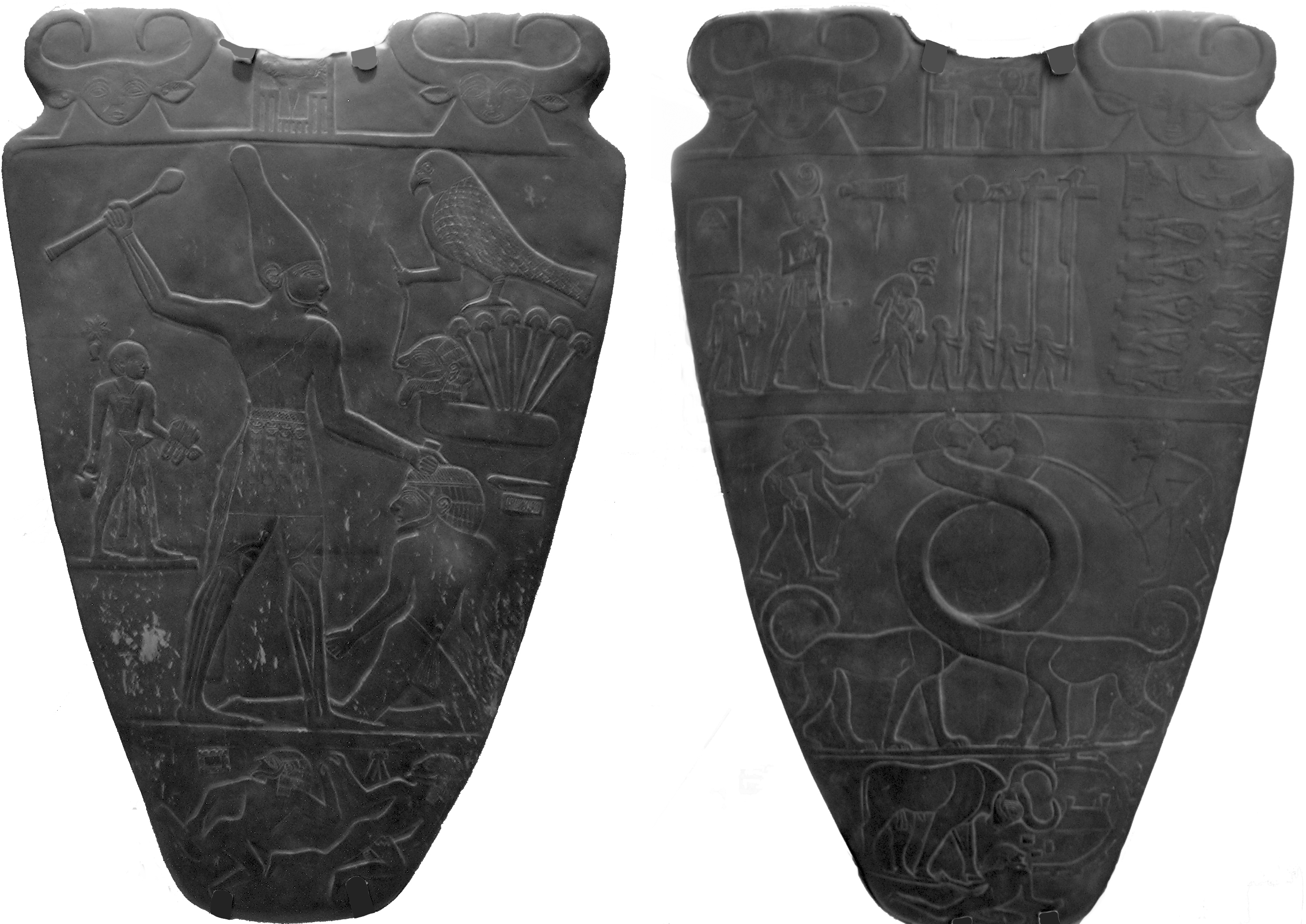
Figure 1 Source Link - The Narmer Palette -- Green Schist, Artist Unknown, c. 2950 BCE
Figure 2 Source Link - Judgement of Hunefer Before Osiris -- Painted Papyrus, Artist Unknown, c. 1285 BCE


QUESTION: How is it possible that what the Egyptians considered "completeness", could be misinterpreted as crude, naïve or unrealistic and how does it affect the “truth” contained in their art?


PART ONE:

SUMMARY: Before I settled on this question, I had been researching for Question #2a about the story of Adam and Eve and the Egyptian's beliefs about knowledge and immortality. Reading analyses of the allegory of the Genesis story (one I am very familiar with) gave me great insight about the interpretation of mythology in general. I then set my sights on Egypt to learn about their beliefs in immortality. I found the mythology fascinating and went through a series of revelations about how the Egyptians viewed the physical and spiritual world and their role in it. After all my reading, I finally understood what this question meant by the word "completeness" and realized that I wanted to answer this question more than the other question. Having the opportunity to immerse myself in the beliefs of ancient Egypt was a great experience.

REASON: The reason this question was asked is to open the mind of the writer to art and cultures that may seem at first glance simplistic or weird. These sorts of prejudices are useless if one wants to interpret and gain something from the art available to them rather than simply lament on the subjective quality of the work.

PURPOSE: The purpose of this question is to force the writer to really look at a piece of art and see its unique qualities and to see beyond stylistic quirks to the heart of an artist's message.

DIRECTION: By answering this question, I feel I have really broke through to a new level of understanding in terms of style and art on a cultural level. I feel much more confident in my ability to see through to the true meaning behind myths and how these concepts relate to the minds of those who create and view them.

IMPRESSIONS: I was not expecting to become so engulfed in the Egyptian side of Question #2a. I was expecting the major benefit of this research to be finally gain an understanding of the Adam and Eve myth and apply this skill to more biblical stories I am familiar with. Learning the Egyptians' beliefs in immortality was sort of wacky but in a fascinating way. Learning more about their religious stories, I saw so much in their art I had never seen before. It felt like my brain had been torn into a million pieces and reassembled as I thought about the meaning and implications of completeness and unity in their art. I have so much respect for Egyptian beliefs knowing what I know now and I am sure they are one of the greatest civilizations to ever put pen to papyrus.


PART TWO:

At the core of any successful design is one basic principle: unity. David Lauer suggests, "Unity is perhaps as close to a rule as art can approach." (Design Basics, David Lauer et al., Cengage Learning, 2011, p. 28) Based on their illustrations, some might consider the ancient Egyptians to have been obsessed with unity and order. Permeating many of their religious myths, for example, is the struggle between chaos and order. The first Egyptian god, Ra, is said to have come into being when he "shaped himself out of the waters of chaos." (Art History Volume 1 3rd ed., Marilyn Stokstad et al., Prentice Hall, 2008, p. 51) With the idea of unity as a driving force in mind, the message in these words and what they reveal about the collective Egyptian mind is powerful. The message here is that the being who preceded all else in existence was the first bringer of unity and integration to the naturally chaotic world.

Next, there is the story of Osiris, the god who first claimed kingship over Egypt. In a fit of jealousy, his brother, the god Seth, hacked Osiris to pieces. Learning of his death, the goddess Isis who was the wife of Osiris recruited her sister and Anubis, the god of embalming and death related activities, to help her reassemble her husband's corpse. After Osiris has been repaired, Isis bears him a son who is called Horus. Horus promptly defeats Seth to reclaim his father's kingship. Osiris, in his own right, becomes the king of the underworld. (Art History Volume 1 3rd ed., Marilyn Stokstad et al., Prentice Hall, 2008, p. 51-52)

The fact that Ra, Osiris, Isis and Horus are all lauded in these stories reveal much about the beliefs of ancient Egyptians. Notable to the story of Horus and Seth is that Horus was considered a force of good and Seth the god of chaos. (Art History Volume 1 4th ed., Marilyn Stokstad et al., Prentice Hall, 2010, p. 51, 61) Here again we see great attention paid to the tug-of-war game between chaos and order, a game which the Egyptians considered order to have won. In this sense, it is easy to understand why the Egyptians survived relatively unchanged for 3000 years, while countless civilizations around them came and went. (http://www.ancient-egypt.org/index.html) In the Egyptian mind, human beings were an island amidst a sea of chaos, fighting the good fight to bring order into a world that will devour anything that can be torn apart.

This complete aversion to chaos can be seen most clearly in the art of these people. Some may look upon works such as the Narmer Palette (figure 1) of the Early Dynastic Period and judge it to be crude. The simplistic representation of forms and ignorance for realistic perspective looks almost childish to a world exposed to the masterpieces of the Renaissance. (Exploring The Life, Myth, and Art of Ancient Egypt, Joann Fletcher, Rosen Publishing Group, 2009, p. 14) Furthermore, there is little emotion injected by the artist and stylistically it is not very different from the Judgment of Hunefer Before Osiris illustration (figure 2) created over a thousand years after the palette. (Art History Volume 1 4th ed., Marilyn Stokstad et al., Prentice Hall, 2010, p. 77) Using the same visual conventions for thousands of years might indicate to some a lack of artistic growth. It might be assumed that the Egyptians did not care to grow, that they were artistic slackers.

These interpretations grossly miss the statement the Egyptians were making with their work. The Egyptian style did not change for so long because their pictures weren't meant to be a display of artistic achievement. In the Common Rider song "Rough Redemption" it is said, "Style communicates the elements of a war." (http://www.softcom.net/users/twolter/lastwaverockers.html) This is an important piece of advice to keep in mind in regard to Egyptian visual art. At their core, these people were historians and storytellers. The war the Egyptians were fighting with their designs was the war between clarity and misunderstanding. Any good storyteller knows that it's all in presentation. No matter how funny the punchline or how hard-hitting the message, if the person or work telling that story fumbles with the details and the order in which they are presented, the story will never land. Not only must a story be presented well, but it also must be concise and appealingly assembled. In other words, "A deft handling of unity is decisive in holding a story together." (Design Basics, David Lauer et al., Cengage Learning, 2011, p. 52) When such important things needed to be said, Egyptians rested on a style so complete in its design that it would be nearly impossible for the message to be corrupted by poor presentation.

The Egyptians seem to have succeeded in this noble goal of clarity above all else. The level of detail seen in each visual piece from this civilization shows that no visual decision stone was left unturned. As one author puts it, "The Egyptians had a marvelous knack for distilling an idea to its purest form in an abstract and powerful way." (http://www.ptahhotep.com/articles/Narmer_palette.html) To illustrate this completeness found in their designs, we turn to an early work, the previously mentioned Narmer Palette. This carving was discovered in 1898 at a location thought to be the Pre-Dynastic capital of Upper Egypt. (http://www.ptahhotep.com/articles/Narmer_palette.html)

In this work, we see that the artist has utilized a number of sophisticated design cues to create a narrative. Commonly thought to show the unification of Egypt and its beginnings as a powerful nation-state, the large form of the King stands as a focal point in the center. (Art History Volume 1 4th ed., Marilyn Stokstad et al., Prentice Hall, 2010, p. 53) Above the figure, a word is written in phonetic hieroglyphs. (Art History Volume 1 4th ed., Marilyn Stokstad et al., Prentice Hall, 2010, p. 52) Here, proximity has been used to link this piece of information with the man below it. (Design Basics, David Lauer et al., Cengage Learning, 2011, p. 34) The viewer now understands that the name of this man is Narmer, the word written in the hieroglyphs. Proximity is also used in numerous items placed with this man that tell the viewer he is a king, such as the white crown of Upper Egypt. (Art History Volume 1 4th ed., Marilyn Stokstad et al., Prentice Hall, 2010, p. 53) Scale is also used in this piece to emphasize not only Narmer's social status, but also his importance within the narrative. (Art History Volume 1 4th ed., Marilyn Stokstad et al., Prentice Hall, 2010, p. 53) Along the same vein, it is noted that the foe kneeling before him is of comparable size to Narmer himself. It appears that the artist utilized scale in this way to make the viewer aware of the main characters in this story of how Narmer tamed Lower Egypt. Creating emphasis through position comes into play in many places in this design as well. (http://www.tersiiska.com/design/principles) We see the god Horus in the form of a falcon sitting above this foe, surrounded by a myriad of symbols associated with Lower Egypt. (Art History Volume 1 4th ed., Marilyn Stokstad et al., Prentice Hall, 2010, p. 53) Looking at this area, one can almost feel the oppressive weight of the god bearing down on the foe. Knowing that Horus is a force of good, this seems to suggest that the message of this narrative is that Upper Egypt's conquer of Lower Egypt was and should be regarded as good. To further support this conclusion, we turn to one more spot where position is key. Above the entire scene, we see the cow-goddess Hathor on either side of Narmer's name. (http://www.ptahhotep.com/articles/Narmer_palette.html) She appears to be making an optimistic facial expression. Hathor was the goddess of love and fertility. (Art History Volume 1 4th ed., Marilyn Stokstad et al., Prentice Hall, 2010, p. 74) Her happy presence above the entire scene seems to indicate that she is protecting the king and condoning his actions.

The amount of symbolic meaning to be found in this piece is phenomenal. The design is not alone in it's narrative richness either; these sort of scenes were commonly found all over Egypt and from every period. Perhaps this style feels simplistic, cluttered, and thoughtless to those who carelessly dismiss Egyptian art, but the level of narrative detail encoded in this composition and others like it proves that the Egyptians were anything but thoughtless or lazy with their visual art. Their ability to cut through the chaotic mess of detail and arrive at the heart of human struggle in its most complete form is incredible. This style of presentation, however simplistic, presents a formidable challenge to anyone attempting to make their name known in the pages of history books when it comes to the utilization of art as a form of communication and storytelling. For now, the Egyptian artistic legacy will live on unmatched as it has for the thousands of years since its creation.

Thursday, April 12, 2012

Topic Question Essay 4: Mother Earth, Fertility, Love and More?

Essay #1c
Mother Earth, Fertility, Love and More?

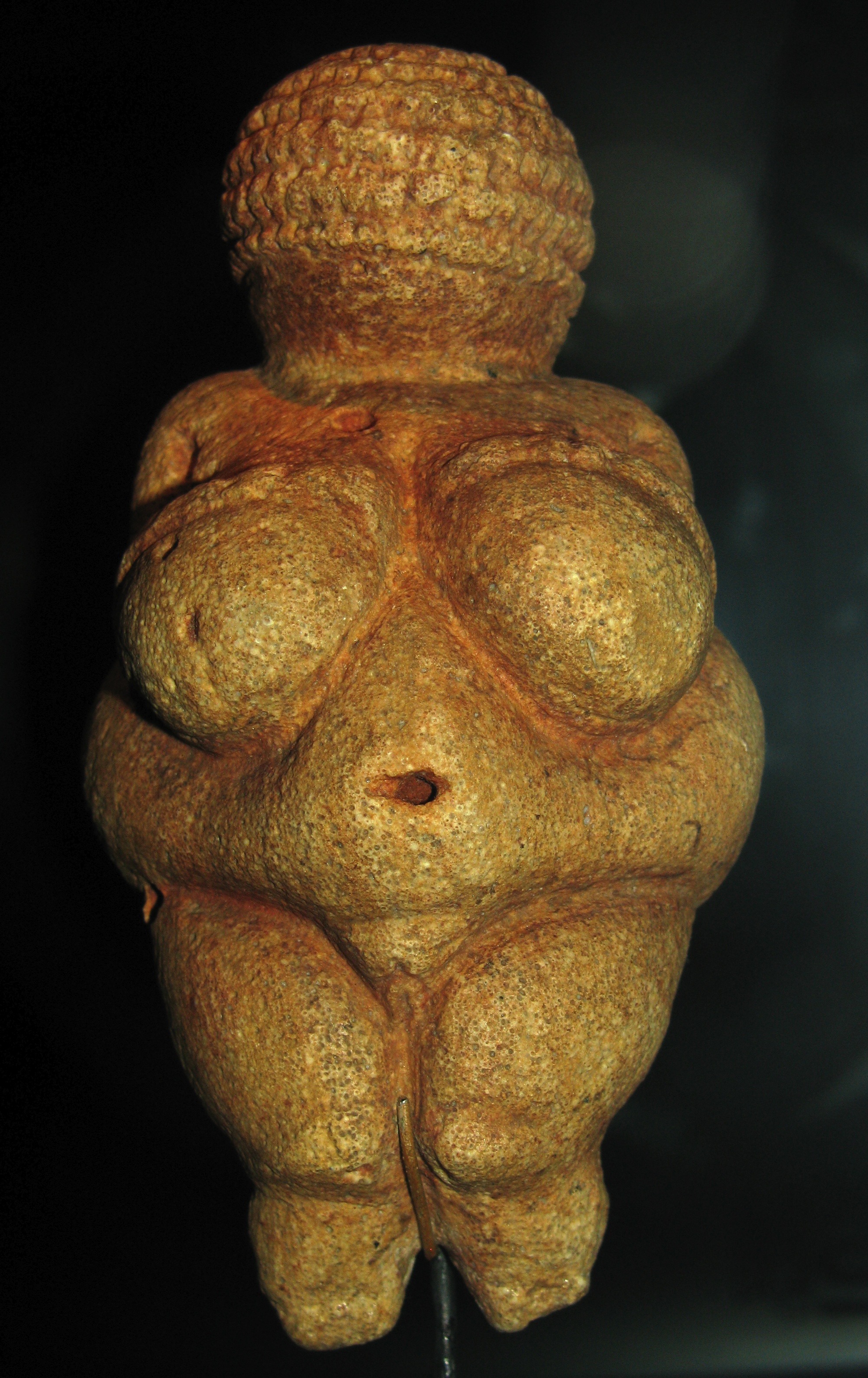
Figure 1 Source Link - Woman from Willendorf -- Limestone, Unknown Artist, c. 24000 BCE
Figure 2 Source Link - Venus De Milo -- Marble, Anonymous Greek Sculptor, c. 150 - 100 BCE
Figure 3 - Source Link - Venus of Urbino -- Oil on Canvas, Titian, 1538


QUESTION: Describe the functional purpose of the Venus of Willendorf and the Venus De Milo. How is their imagery similar? How is it different? Find a third Venus example to compare and contrast these two to and describe why you selected it.


PART ONE:


SUMMARY: My attempt to answer this question has really opened my eyes to how rife with meaning a simple depiction of one woman could be. It was challenging to choose only one direction to go with this paper but I am pleased with the road I did take with these pieces.

REASON: As mentioned in the summary, I think the reason this question was asked is to demonstrate that even the most seemingly simple pieces of art contain meaning.

PURPOSE: The purpose of this question is to force the writer to really look at a piece of art, to examine every detail and notice that nothing is there by accident. By examining these works, I now see the uniqueness between different nudes, even those that seem so similar that I barely noticed the differences at first.

DIRECTION: When I finally began to answer the question, I was torn between which angle to approach the topic. It was difficult to settle on just one interpretation for any of these works of art because even something as simple as the tiny Willendorf statue is rich with meaningful imagery. I went through many drafts of this paper, this final I feel most concisely outlines my views about how these artworks relate to traditional ideas of femininity.

IMPRESSIONS: In my attempt to answer this question, I felt almost overwhelmed with the memories of past books I have read on evolutionary psychology and human sexuality and this paper has absolutely renewed my interest in these subjects. It is also amazing to me how much meaning a simple pose can carry with it into the viewer's mind when they look at female nudes.


PART TWO:

Works of art commonly referred to as depicting a "Venus" may share a common link in their function as works viewable by others. The works illustrate the closeness of marketing concepts to art, in the sense that both fields tackle the human identity issues of their viewers. Many advertising strategies today focus not on a boring display of a product's empirical value, but rather the implications that product has on the social status of those using it. (Spent, Geoffrey Miller, Penguin, 2009, Kindle Edition, location 1285) If one keeps this in mind whilst viewing artistic representations of nude women, one of their reasons for being becomes clear.

Humans have many basic needs. One of our most primal needs is to fit in, to connect with other humans, to belong. (http://www.edpsycinteractive.org/topics/conation/maslow.html) This is not negotiable, but rather built into our complex brains. Humans are also clever animals and our brains have an relentlessness tendency to lay out the outcomes of any situation and play the odds. Forming relationships with people requires a time investment and our brains have even developed an efficiency strategy in this regard; humans can judge the attractiveness of a face and its features in one seventh of a second. (The Mating Mind, Geoffrey Miller, Anchor, 2000, p 204) The assessment of their entire appearance follows closely behind this initial glance. This sounds very basic but it is still impressive that we can make a judgment about what kind of a person an acquaintance may be in such a short timespan.

This system can be as flawed as it sounds at times, but for a discussion on the imagery of the female body it is a salient point. Aside from being efficient judges, humans are also rather biased judges. Not only do we regularly make snap judgments with little basis in reality, but we also often base our decisions to associate with these people on ideas about appearance we have absorbed from our peers. We think people who wear leather jackets are cool because the Fonz was cool and people who wear glasses are awkward because Steve Urkel was awkward.

In the Venus art pieces, we can see these preconceived notions at their genesis. Take the Venus of Willendorf (figure 1) for example. Discovered in Austria, this statue dates back to the prehistoric humans of 24,000 BCE. (Art History Volume 1 4th Ed, Marilyn Stokstad et al., Prentice Hall, 2010, p 6) The Willendorf woman, although seemingly simple, may reveal key ideas about femininity held by humans of this time. One might expect to look upon this statue with disgust, for at first glance she seems to be nothing more than a fat, bulbous woman. However, there is something oddly attractive about her ample breast and bulging belly. This attraction is likely linked to the impression that this woman is a healthy, well-nourished sort of fat rather than simply obese. (Art History Volume 1 4th Ed, Marilyn Stokstad et al., Prentice Hall, 2010, p 6) Focusing on where the artist chose to exaggerate her features, this effect is obviously no mistake. All of this woman's sex characteristics are enhanced to an almost unimaginable ideal for such a meager time in human history.

Survival was the everyday battle of all humans of this time period. The threat of starvation and hardship was always on the horizon for many. In such brutal conditions, the stakes were always high. Today people worry about finding a good spouse or companion and the only difference back then was different values and a survival drive dialed to eleven. (The Mating Mind, Geoffrey Miller, Anchor, 2000, p 186) The big question in the back of most humans' minds was almost certainly, "how do I find a mate who will produce children worth my time investment?" It may be cynical to lay it out that way but there is truth in those words. If one wanted to pass on their DNA for the continuity of their own genepool (a motivation fueling many animal's actions,) there was no time to waste on inadequate mate whose babies may not thrive.(The Mating Mind, Geoffrey Miller, Anchor, 2000, p 185)

This is where the concept of art as marketing returns to the spotlight. The Willendorf statue is that of a healthy, fertile woman. Not only that, but she seems rather free with her body, presenting her genitals for all to see. In a cave man's eyes, she was the perfect woman -- a willing and healthy partner. This piece is almost like a primitive advertisement for mothers, especially when one considers the popularity of the subject at the time. Similar statues from roughly the same time period have been found throughout the European continent. (Art History Volume 1 4th Ed, Marilyn Stokstad et al., Prentice Hall, 2010, p 7) It is almost as if the artists were trying to generate awareness for such mysteriously attractive women and convince viewers that the exaggerated features seen here should elevate women to a higher status within their society. The portability of this statue adds considerable weight to this theory, for it is only four inches tall. (Art History Volume 1 4th Ed, Marilyn Stokstad et al., Prentice Hall, 2010, p 6) It must have been important to the artist for this statue to be passed around for all others to see and admire. Male viewers would be inspired to seek the Willendorf woman's real life counterpart. Female viewers would be inspired to draw attention to these parts of themselves, knowing this is where power lies. Perhaps like Helen of Troy, wars were even fought over such impossibly beautiful women.

The second statue worth note on this subject of feminine ideals is the Venus de Milo or Aphrodite of Melos (figure 2.) This statue was created between 150 - 100 BCE and depicts a partially draped Aphrodite in a slightly contorted position. (Art History Volume 1 4th Ed, Marilyn Stokstad et al., Prentice Hall, 2010, p 157) Similar to the Willendorf, the De Milo's hips are quite accentuated. Some of this is her natural feature, but much of this is also dependent on the way she carries herself. The way her spine is curved causes her hip to project outward, creating a dramatic curve on one side. (Art History Volume 1 4th Ed, Marilyn Stokstad et al., Prentice Hall, 2010, p 157) The tension of this pose is carried to its extreme by the intricately detailed drapery just barely clinging to this area of her body, ready to fall at the slightest provocation.

An advertising trick that has survived into modern times is at play once again in this elegant statue. This trick would be the use of a celebrity model to "sell" an idea to the public. (Spent, Geoffrey Miller, Penguin, 2009, Kindle Edition, location 1481) In a Hellenized world, the goddess of love and beauty was about as high status as a woman could get. The sculptor has used her status as a shortcut to sell his idea of feminine attractiveness to viewers. In this case, the message about sexuality and sexual attention women might absorb from such a pose is that seduction is more than just the body, it is also in the way a woman acts. The Venus de Milo barely acknowledges her viewer but intentionally draws attention to the cloth that just barely covers her genitals, the most powerful part of her sexuality. Such a combination of action creates the idea in the male viewer's mind that she just might be attainable. Essentially, this Venus wins her man by playing hard to get.

Unlike the Willendorf, this sexual message is much more complicated but still fits with the time. In the first century Greek world, mate choice probably did not depend so heavily on genes alone. Such societies included Women would have to attract a husband of decent status who could provide for her and her offspring and men had to choose a wife that might positively contribute to his reputation. The Venus de Milo seems to balance this role as gracefully as she balances the draped fabric on her hips. She does not have any hyper exaggerated fertility features, but she works with what she has to gain the most power and turn the most heads. Her ability to garner admiration from all who gaze upon her relates to another advertising strategy: humans are drawn to exclusivity and the gauge by which one measures exclusivity is in the jealousy of those around him. An expensive sports car, for instance, is advertised in magazines whose main demographic cannot afford a product. The purpose is to create a buzz around the product. (Spent, Geoffrey Miller, Penguin, 2009, Kindle Edition, location 1496) Like the arbitrarily valuable car, her sexuality's ability to enhance her man's status can only be strengthened if she advertises herself so that others may gaze upon her with envy. The end result is that this Aphrodite has driven up her own value and status tremendously by simply displaying herself in such a way. For any woman looking for a husband in a society where marriage and socioeconomic status are intertwined these would be very important goals.

On a final note, we turn our attention to the painter Titian's Venus of Urbino (figure 3.) This 1538 painting is notable because it is unlike the other two pieces; an entirely different sort of attitude towards sexuality is present. Once again, although quite different from the previous poses, these ideas about female attractiveness fit the time quite well. During this century, the Renaissance was fresh in everybody's mind, especially in the painter's home land of Italy. (http://academic.brooklyn.cuny.edu/english/melani/cs6/ren.html) This time period marked significant changes in the thought patterns of society and Titian seems to have latched on to this to encourage a more liberated, empowering display of female sexuality.

The woman in this painting plays the part of a seductress, keenly aware of the power her own body holds over the viewer. The attitude of freedom and sexual control over her body practically oozes from every pore of the young model's perfect pale skin. She even bares her whole self completely uncovered, despite the ready availability of sheets to preserve her modesty. Unlike the faceless Willendorf statue who also bares herself in full, the Urbino Venus' eyes seductively confront the viewer while her hand leads the eye towards a second focus just by her genitals.  For these reasons, many have described this work as "unapologetically erotic." (http://en.wikipedia.org/w/index.php?title=Venus_of_Urbino&oldid=485594255) The woman in this painting is well proportioned, flawless, self-assured -- perfect by many's standards. She exudes a maturity and confidence with her femininity that surely a great deal of women wish to master. (Art History Volume II 4th Ed, Marilyn Stokstad et al., Prentice Hall, 2010, p 659)  It is hard to imagine the effect this painting had on women at the time but perhaps Titian's powerful image inspired more than a few to seize their own erotic power and become the goddess that the Venus of Urbino clearly is.